
Reviewed · HISTORICAL TOURS
History and Culture in my Belgrade
Belgrade’s story comes in sharp contrasts: a grand Orthodox church, buildings left damaged by the 1999 bombing, Ottoman traces, communist-era memories, and a tiny shop serving Serbian rakija and homemade sweets. This three-hour walk with Marija links those pieces in a way that gives you a useful first sense of the city.
I like the small-group format, usually capped at six people, and the tasting stop in Čumićevo sokače. I also like that the tour does not stop at postcard sights, but explains modern Serbian life, local customs, and the difficult years of the 1990s.
The main drawback is pace. You cover a lot of ground in about three hours, with many short stops, so this is better for broad orientation than long visits inside each site. The tour is offered in English, and most of the walking takes place outdoors.
Key points to know before booking
- A compact route with 12 named stops runs from St. Mark Orthodox Church to Kosančićev Venac.
- Marija’s strength is connecting past and present, from medieval rulers and Ottoman rule to Yugoslavia and contemporary Belgrade.
- The tasting stop is a real part of the tour, with rakija, wine, juice, jam, slatko, honey, and other Serbian flavors.
- The group is designed to stay personal, with six people preferred and a maximum of 15 listed.
- Three start times make it easier to fit the walk around your arrival or other plans.
- You finish at a viewpoint overlooking New Belgrade, the Sava River, and traditional floating venues called splavs.
Why this Belgrade walk works as an introduction
This is not a tour built around one grand monument. It is a walking lesson in how Belgrade became Belgrade. You move from religion to politics, from wartime memory to student life, then from old neighborhoods to food and drink.
Marija is the guide, and her role matters here. The subject is not simple. Serbian history includes medieval rulers, Ottoman rule, Yugoslavia, the breakup of the country, NATO bombing in 1999, and the changes of contemporary life. The strongest praise for her centers on making difficult subjects easy to follow and tying historical events to everyday life.
That approach suits you if you want context rather than a string of dates. You will hear why a building matters, how a custom works, and what a place means to people in Belgrade now.
The listed price is $90.11 per person. That is not a bargain-priced orientation walk, but the value improves if you want a small group, a personal guide, and food tasting in one package. The tour also saves you the work of joining several separate activities during your first day.
A few more things to book in Belgrade
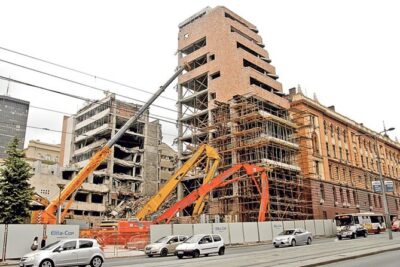
- NATO Bombing of Belgrade Historical Tour
★ 5.0 · 17 reviews - Football tour: Red Star and Partizan Ultras History
★ 5.0 · 14 reviews - Tito and History Vintage Car Tour
★ 5.0 · 11 reviews
St. Mark Church begins the story
Meet Marija in front of St. Mark Orthodox Church on Bulevar kralja Aleksandra. The church is described as the second largest in Belgrade, and its size gives the opening a suitably formal feel.
You go inside together, where Marija explains Serbian Orthodox customs and religion. You also learn about one of Serbia’s major medieval rulers and see his remains. This is a useful start because Serbian identity and history are closely tied to Orthodox traditions, yet a short visit can leave you unsure what you are looking at without guidance.
The planned visit lasts about 20 minutes. That is enough for an introduction and a quiet look around, but not a long architectural study. If churches are a major interest for you, treat this as a starting point rather than a complete religious tour.
The 1999 bombing is made personal at RTS
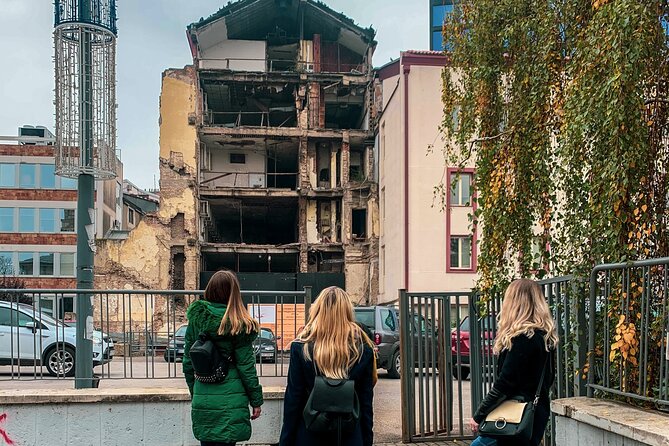
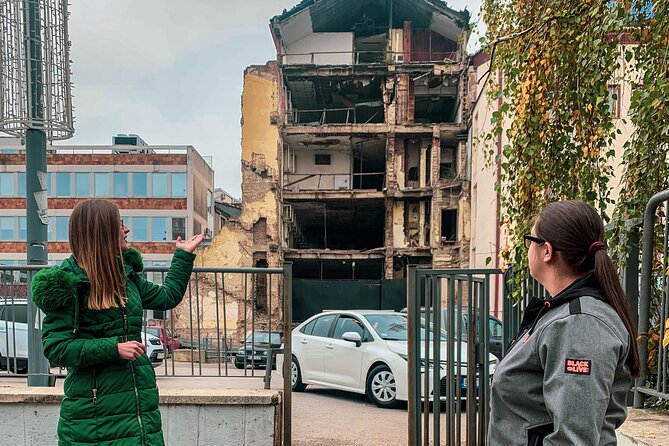
The next stop is RTS, the Radio Television of Serbia. Here you see buildings damaged in the 1999 bombing and hear the tragic stories connected with the site.
This part gives the walk emotional weight. The tour does not present Belgrade as an old European capital frozen in the past. It deals with events that still shape Serbian memory, politics, and daily conversation.
Marija also discusses Yugoslavia, the Serbian economy, and contemporary life. That combination helps you place the damaged buildings in a wider setting. You are not simply looking at ruins. You are considering how a country and its people moved through the 1990s and what followed.
Expect about 20 minutes here. The subject can feel heavy, especially early in a city walk, but it is an important counterpoint to the lighter food and neighborhood stops later.
Tasmajdan Park and the political center
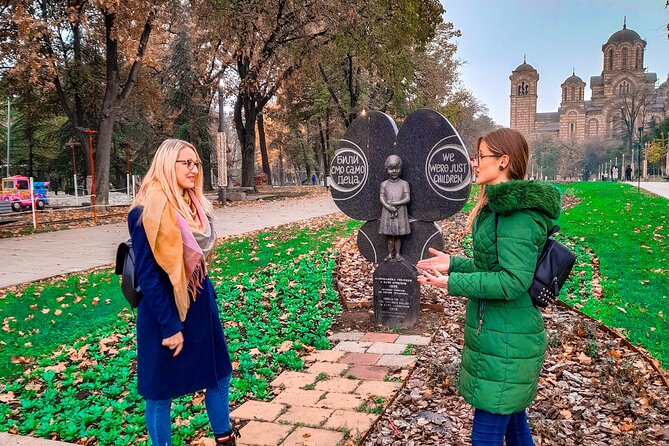
Tasmajdan Park offers a change of mood. It is a green public space with a calm feel and stories about mysteries and underground passages. The visit is short, around 15 minutes, so think of it as a pause and a chance to ask questions rather than a full park tour.
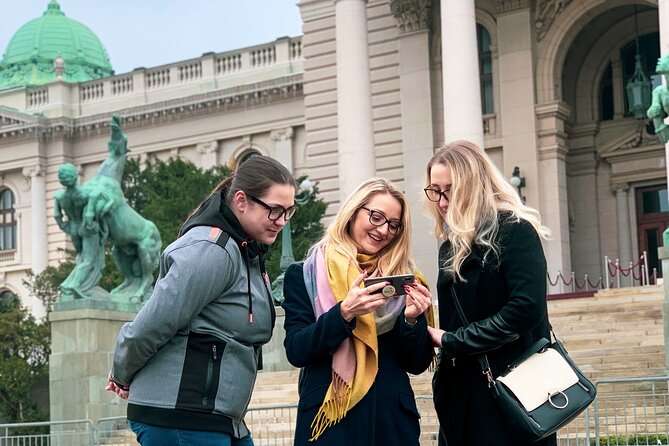
From there, the route reaches the House of the National Assembly of the Republic of Serbia. The monumental building is tied to major protests and political struggles. You also hear why it became associated with a phrase connected to Game of Thrones, an unusual detail that gives the formal building a little local humor.
At Nikola Pašić Square, Marija explains why this is the youngest square in the city. The fountain has its own modern customs involving Belgrade’s younger residents. This is one of the tour’s useful habits: it treats public spaces as places where people actually live, meet, protest, and play, not just as architectural backdrops.
These stops last roughly 10 to 15 minutes each. The short timing keeps the walk moving, but you will not have much time for an extended look at the Assembly building or park.
Same city, a different kind of afternoon:
- Northern Serbia: Sremski Karlovci and Novi Sad Full-Day Tour from Belgrade
★ 5.0 · 425 reviews - Day Trip from Belgrade: Gems of Eastern Serbia
★ 5.0 · 424 reviews - Belgrade Nightlife Bar Pub Club Crawl with Drinks
★ 5.0 · 277 reviews - Taxi to/from Belgrade Airport to/from Belgrade City Center
★ 5.0 · 241 reviews
A local tasting in Čumićevo sokače
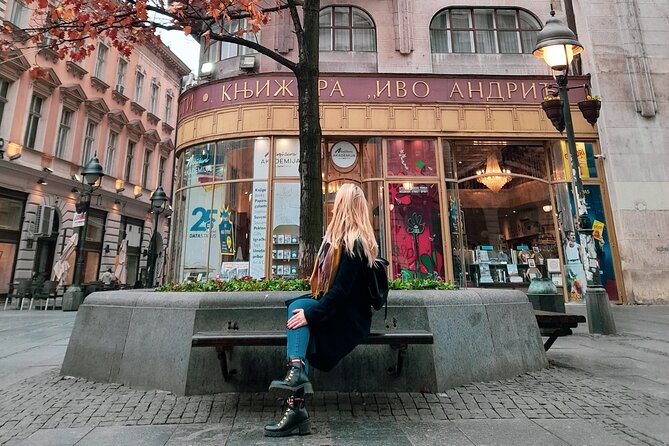
The tasting stop is the most hands-on section of the walk. In the small Belgrade design district of Čumićevo sokače, you visit a local shop and try a selection of Serbian products.
You may taste:
- Domestic rakija
- Serbian wine
- Natural juices
- Jam and slatko
- Honey
- Other handmade local flavors
You also learn old customs, Serbian hospitality, and the local way to say cheers. The tasting lasts about 30 minutes, making it the longest single stop.
This is valuable because food explains culture without requiring a lecture. Slatko, for example, is tied to Serbian hospitality, while rakija is part of social customs and celebrations. The tasting gives you a short list of things to look for during the rest of your time in Serbia.
The setting also adds something. Čumićevo sokače is part of Belgrade’s design district, so you get a look at a smaller local retail area rather than only the city’s grand squares. Still, the tasting is not presented as a full meal. If you book the tour around lunchtime, plan to eat separately.
Republic Square, Knez Mihailova, and student life
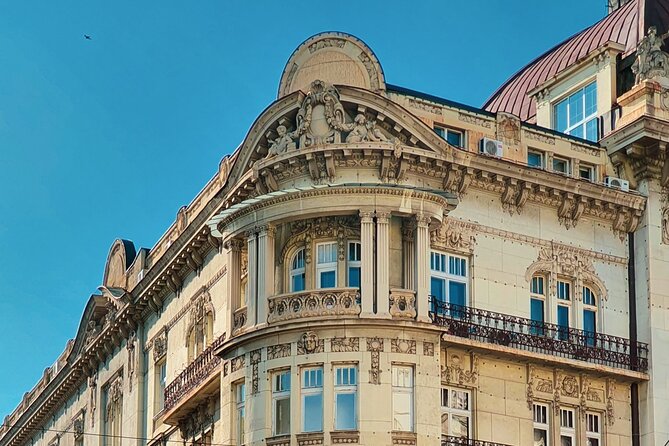
Republic Square brings you back into the city’s social center. It is Belgrade’s best-known square and a natural place to watch the city move around you. The stop lasts about 10 minutes.
You then cross the main pedestrian zone, known for street musicians, cafes, and a lively street atmosphere. This section is less about a single monument and more about getting a feel for how central Belgrade works as a public space.
At the University of Belgrade, the route reaches Students’ Square and its park. Marija talks about education in Serbia, adding another layer to the modern city. The stop takes about 10 minutes, so you get a focused introduction rather than a campus visit.
These central sections help balance the heavier material at RTS and the formal political buildings. You see the ordinary rhythms of the city: students, cafes, music, pedestrians, and public gathering places.
Dorcol shows Belgrade’s changing character
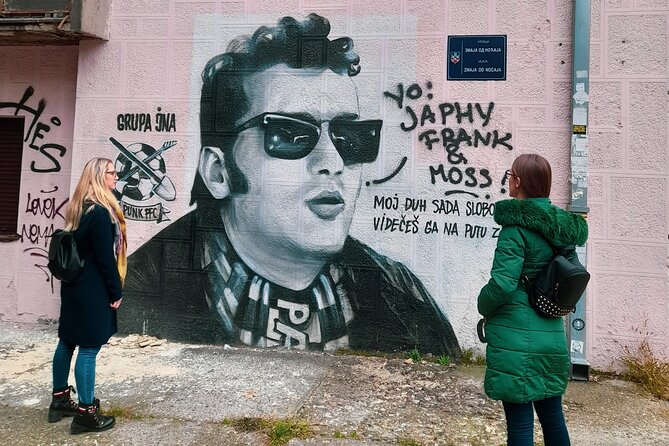
Dorcol is one of the more atmospheric parts of the route. You walk through the neighborhood and see distinctive graffiti while hearing stories from its past.
The value here is the contrast. Dorcol is not presented as a museum district. Its walls, streets, and older layers show a city that keeps changing. You get a sense of how historic areas can carry memories while also serving as creative, social neighborhoods.
The walk through Dorcol lasts about 15 minutes. The route includes many stops, so do not expect a long exploration of every side street. If you want more time for photographs or street art, note the location and return later.
Ottoman traces at Bajrakli Mosque
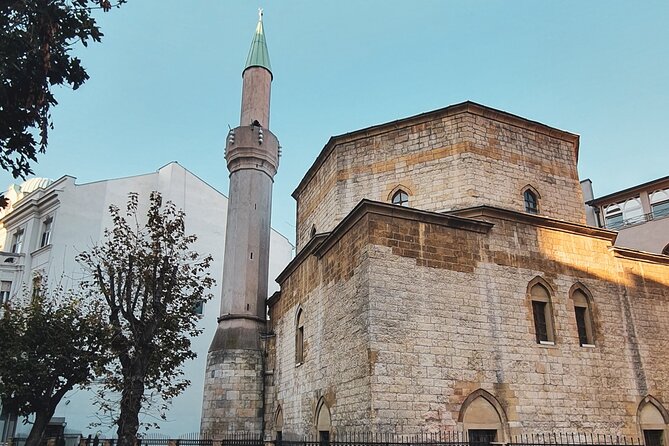
Bajrakli Mosque is the only preserved mosque in Belgrade from the 273 mosques that once existed in the city. The stop introduces nearly five centuries of Ottoman influence in Serbia.
That fact alone makes the visit important. Belgrade’s story is not only Orthodox, Serbian, or modern. Ottoman rule shaped architecture, food, language, trade, and urban life, and this mosque offers a clear reminder of that period.
The visit is planned for about 15 minutes. The supplied details do not promise an extended interior visit, so treat it as a focused historical stop. Modest dress and respectful behavior are sensible when visiting a religious site.
Kafana culture at the Question Mark
Znak Pitanja, or Question Mark, is tied to the architecture of Belgrade’s oldest traditional restaurant, known locally as a kafana.
A kafana is more than a place to eat. It is part of the social fabric of the city, linked with conversation, food, drink, music, and daily life. This stop gives you cultural context before you explore Serbia on your own.
You spend about 10 minutes here. The tour does not present it as a dining stop, so save a return visit if you want to eat in this historic setting.
The final view from Kosančićev Venac
The walk ends in Kosančićev Venac, one of Belgrade’s oldest areas. You stroll along a cobblestoned street, see an Orthodox church, and reach a viewpoint over New Belgrade, the Sava River, and traditional Serbian splavs.
This is a strong ending because it brings several themes together. You see the older city, the newer city across the river, and the water that helps define Belgrade’s position. The splavs are floating venues associated with Serbian nightlife and leisure, giving you one more glimpse of present-day culture.
The official end point is Kosančićev venac 22. The final walking section is listed at about 10 minutes, though the whole route includes movement between stops. Wear comfortable shoes, since the tour involves city streets and cobblestones.
Timing, group size, and practical value
The experience lasts about three hours and offers three start times. That makes it useful on a first full day, after a morning arrival, or at the start of a longer Serbian trip when you want advice for the days ahead.
The small-group promise is one of the strongest practical features. Six people allows you to hear explanations, ask questions, and keep a reasonable walking pace without feeling like part of a large crowd. The listed maximum is 15, so confirm the group size at booking if the smallest format matters to you.
The walk is offered in English. It is near public transportation, and most people can take part. Every named stop has free admission, but the price covers the guide’s time, the route design, and the tasting experience rather than entry tickets.
You receive confirmation when booking. Free cancellation is available up to 24 hours before the local start time. Changes or cancellations inside that window are not accepted for a refund.
Who should book this experience
I would choose this walk if you are new to Belgrade and want a strong first orientation. It suits you especially well if you enjoy political history, religious traditions, neighborhood walks, and food customs in equal measure.
It is also useful if you have only half a day. You see many central sights without giving up a full day to a formal city tour. Marija’s focus on modern life makes the walk a good fit for anyone who wants more than medieval dates and monument names.
You may want another option if you prefer long museum visits, a slow photography walk, or a tour centered on one period. The schedule is active, the stops are short, and the route covers a broad range of subjects.
Should you book History and Culture in my Belgrade?
Book it if you want Belgrade explained through contrasts: Orthodox faith and Ottoman influence, old streets and modern graffiti, war damage and cafe life, formal politics and homemade rakija.
At $90.11, the price makes the most sense when you value a small group and a guide who can connect complicated events with daily Serbian customs. The tasting, final river view, and direct advice for the rest of your Serbian trip add practical value.
Skip it only if you want a slower tour with more time inside each site. For a compact first look at Belgrade, this is a well-rounded choice with a personal guide and a route that reaches beyond the standard postcard stops.
FAQ
How long does the tour last?
The experience lasts approximately three hours.
How much does the tour cost?
The listed price is $90.11 per person.
Is the tour offered in English?
Yes, the tour is offered in English.
Where does the tour begin?
It begins in front of St. Mark Orthodox Church at Bulevar kralja Aleksandra 17 in Belgrade.
Where does the tour end?
It ends at Kosančićev venac 22 in Belgrade.
How many people can join?
The tour highlights a maximum group size of six people, while the additional information lists a maximum of 15 travelers.
What food and drinks are included in the tasting?
The tasting may include domestic rakija, wine, natural juices, jam, slatko, honey, and other Serbian handmade flavors.
Are admission tickets included?
The listed admission cost is free at each named stop.
Can I cancel for a full refund?
Yes. You can cancel at least 24 hours before the local start time for a full refund. Cancellations or changes made less than 24 hours before the start are not refunded or accepted.
Just added in Belgrade
- Belgrade Layover Private tour + E-Scooter Sighteeing★ 5.0 · 6 reviews
- Belgrade Insight Private Tour – For Those Who Seek Answers★ 5.0 · 6 reviews
- Belgrade Private Driving & Walking Tour★ 5.0 · 4 reviews
- Belgrade Fashion and Design Tour – Discover Local Designers★ 5.0 · 4 reviews
- 4-Hour Belgrade Private Grand City Walking Tour★ 5.0 · 8 reviews
- Belgrade Local Craft Beer Tasting Tour★ 5.0 · 8 reviews
- Belgrade Chuggalong – Pub Crawl★ 4.0 · 8 reviews
- Ada Lake Tour★ 5.0 · 7 reviews
Historical Tours, compared.
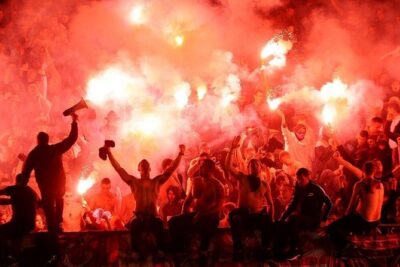
Football tour: Red Star and Partizan Ultras History
Read our review →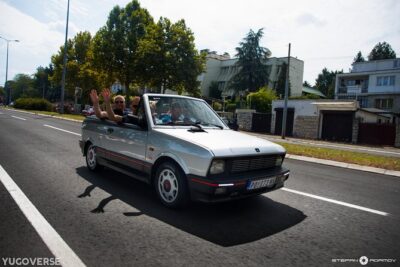
Browse the lists this tour appears in