
Reviewed · BELGRADE FORTRESS & OLD TOWN TOURS
Private Belgrade Street Art and Adventures Walking Tour
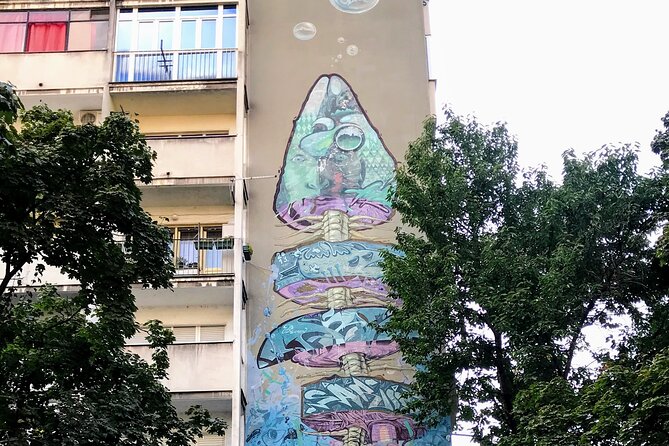
Belgrade’s street art tells you plenty about the city: its past, its politics, its artists, and its habit of turning worn spaces into places with purpose. This private walk takes you from the Terazije Fountain through murals, artist spaces, abandoned buildings, and alternative nightlife areas, with a guide who explains the ideas behind what you see.
I like two things right away. First, the tour looks beyond the usual central sights and gives you a view of Belgrade’s independent culture. Second, the private format lets you ask questions and set the pace with your own group. The main drawback is the price: $219.94 per person is a serious spend for a three-hour walk, especially since snacks and alcohol are extra.
Key points at a glance
- Five distinctive stops: Visit Magacin, the Karađorđeva 31 mural, Belgrade Design District, Street Gallery, and Cetinjska 15.
- Street art with context: Learn how murals connect with Belgrade’s history, sacral art, public space, and current cultural life.
- A private walking experience: Only your group takes part, which makes conversation and questions easier.
- Alternative Belgrade: See an open-calendar cultural centre, a former shopping mall used by designers, and a former brewery now filled with bars and galleries.
- Three hours on foot: The route is close to public transportation, begins and ends at Terazije Fountain, and gives you a focused introduction to the city’s creative side.
- Extras are not included: The tour may include the chance to try local craft beer and handmade sweets, but snacks and alcoholic drinks must be paid for separately.
Why street art is a smart way to read Belgrade
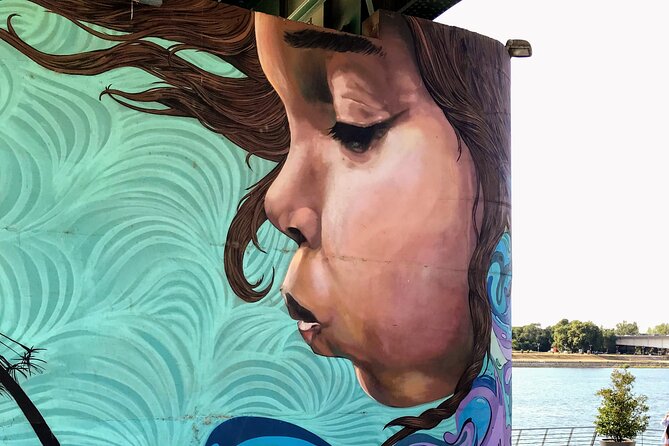
A standard city tour can show you Belgrade’s major buildings and monuments. This one asks a different question: how do people use the city when official spaces do not tell the whole story?
You’ll hear about alternative culture, squatters, underground art, and independent projects. Those subjects matter because they show how residents respond to empty buildings, neglected passages, old commercial sites, and unused industrial spaces. In Belgrade, art often appears where formal galleries are not available or not wanted.
The route also helps you look at murals as more than colorful backdrops. You’ll consider who made them, why they were painted, and what they add to a public street. The guide’s role is especially important here. A mural can look impressive in a photograph, but its connection to local history or religious imagery may not be obvious without explanation.
The private setup gives this subject room to breathe. You can ask about a symbol, stop to take a closer look, or ask how an area changed over time. With four other people, the walk should feel personal rather than like a lecture delivered to a crowd.
Other old-town walks in Belgrade:
- E-Scooter Zemun Tour
★ 5.0 · 26 reviews - Architecture of New Belgrade – Brutalism Decoded
★ 4.5 · 24 reviews - Kalemegdan Segway Tour
★ 5.0 · 18 reviews
Starting at Terazije Fountain
The meeting point is Terazije Fountain in central Belgrade. The tour begins and ends there, so you do not need to arrange a separate ride back from an unfamiliar neighborhood.
That central starting point is practical. The area is near public transportation, and the route is designed as a walking experience rather than a series of distant stops requiring a vehicle. You should still wear comfortable shoes. Three hours on foot, with time spent standing at several locations, calls for sensible footwear more than stylish footwear.
The tour is described as suitable for most people, but no exact mobility details are provided. If you have concerns about stairs, uneven surfaces, or entry into old buildings, ask the provider before booking. The itinerary includes abandoned and underground areas in its wider description, but it does not specify the condition or access arrangements for each place.
Magacin, where culture works on an open calendar
The first named stop is Magacin, one of Belgrade’s oldest alternative cultural centres. Its open-calendar model is the key detail. Instead of operating only through a fixed program controlled by one organization, the space is used for cultural and social activities through a more flexible system.
For you, that means the building is part of the story, not just a quick photo stop. Magacin is also a street art hotspot, so the guide can connect the artwork on and around the centre with the way the space functions.
Admission is free. That matters because it keeps the tour focused on access and ideas rather than ticketed attractions. Still, an open cultural centre may not have the polish or predictable presentation of a museum. You should expect an independent space with its own character, not a carefully staged exhibit.
This is likely one of the better places to ask questions. How does an independent cultural centre survive? Who uses it? What kinds of events happen there? The tour description suggests that the guide can place Magacin within Belgrade’s wider alternative scene, which gives the stop more weight than a simple look at a decorated building.
The Karađorđeva 31 mural and its religious references
At Karađorđeva 31, you’ll see a mural painted in 2008 during the BELEF festival by French artist Guillaume Alby, known as REMED. The work draws on Belgrade’s history and sacral art, giving the guide a clear starting point for explaining how street art can borrow from older visual traditions.
This is the sort of stop where context changes what you see. Without an explanation, you might notice the scale, shapes, and color. With one, you can consider how a contemporary artist interprets a city’s past and religious imagery in a public setting.
The mural also shows that Belgrade’s street art scene is not limited to local artists. The tour promises work by artists from many parts of the world, and REMED’s piece provides one concrete example. That international connection adds range, while the subject keeps the focus on Belgrade.
The practical limitation is that public art changes. Paint fades, nearby buildings change, and access to the best viewing angle may vary. The experience depends on seeing works in their real setting, so it will not feel as controlled as a gallery visit. That is part of the appeal, but it also means the route is tied to the condition of the city at the time of your visit.
Other walks around Belgrade:
- Belgrade: 3-Hour Small Group Walking Tour
★ 5.0 · 180 reviews - Half-Day Sightseeing and Walking Tour of Belgrade City
★ 5.0 · 37 reviews - Belgrade City Walk, Gathering and Sightseeing
★ 5.0 · 19 reviews - Belgrade Private Walking Tour with a Local
★ 5.0 · 19 reviews
Belgrade Design District in a former shopping mall
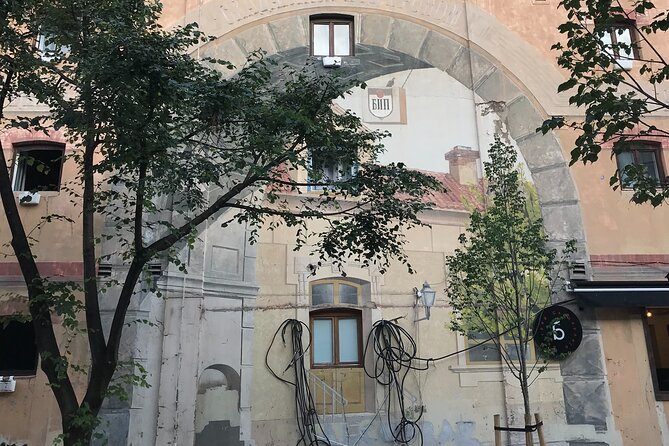
The Belgrade Design District occupies an abandoned shopping mall from the 1990s, now used by young designers and artists. This may be the most direct example of the tour’s central idea: a place built for one purpose finds a new life through creative use.
You’ll see how design work and local enterprise can occupy an old commercial setting. The stop gives you a chance to understand Belgrade’s creative economy through physical space, not just through a guide’s description. The story is about reuse, but also about who gets to claim a neglected part of the city.
Allow roughly 30 minutes here. That is enough time for an introduction and some looking around, though it is not a long shopping visit. If you are interested in buying items from local designers, the tour information does not promise purchases or list specific shops, so treat this as a cultural stop rather than a retail excursion.
I also like the contrast with the mural stop. The Karađorđeva piece is a single major artwork tied to a festival. The Design District is a working environment where many artists and designers use space in an ongoing way. Together, the stops show both public art and the wider community that supports creative work.
Street Gallery in a passage most people would miss
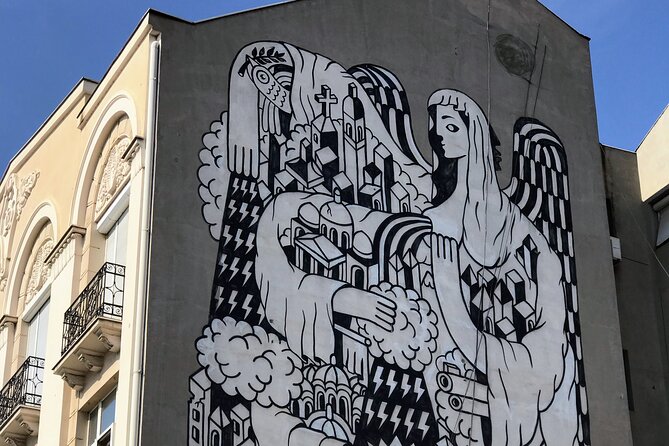
Street Gallery is an independent outdoor gallery located in a tucked-away passage. It focuses on critical work by young artists, so the emphasis is not simply on decoration.
This stop should appeal to you if you enjoy art that asks awkward questions. The gallery format gives artists a place to comment on society and public life without the formal setting of a museum. Because it is outdoors and independent, the work remains connected to ordinary city movement. People pass through the same space for daily reasons while art changes what that passage means.
The gallery also helps explain why a local guide is useful. You can walk through a passage and see very little if nobody points out its purpose. The tour draws your attention to a place that might otherwise blend into the city.
The tradeoff is that outdoor exhibitions can change. The listing does not promise a particular artist or installation on your date, so you should think of the stop as a look at the gallery’s role rather than a guarantee of one specific show.
Cetinjska 15, from brewery to alternative hub
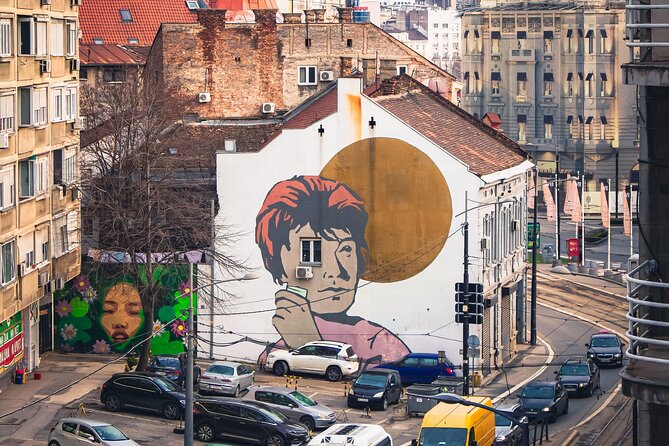
The route’s final named stop is Cetinjska 15, a former brewery transformed into a cluster of bars, clubs, galleries, and street art. This is where the tour shifts most clearly from daytime art viewing toward Belgrade’s nightlife culture.
You’ll see how an old industrial site can become a social center. The mix matters: bars and clubs bring people in, galleries add a cultural purpose, and the street art gives the area a strong visual identity. The result is not a conventional museum district. It is a place where art, drinking, music, and everyday social life overlap.
The tour description says you will try fine craft beer from Belgrade breweries and handmade sweets, but the included items list covers only the guide. Snacks and alcoholic beverages are not included. Plan to pay separately for anything you consume, and confirm with your guide how the tasting portion works on your date.
For many people, Cetinjska 15 will be a fitting final stop because it shows culture in use. You are not simply looking at a historic building. You are seeing a former workplace adapted for contemporary social life.
What the three-hour private format gives you
Three hours is a useful length for this subject. It is long enough to connect five main stops without turning the walk into an exhausting full-day commitment. It also leaves you with time to explore other parts of Belgrade afterward.
The private format is the bigger advantage. Only your group participates, so you can ask about a particular artist, request more historical context, or spend less time on a subject that does not interest you. A private tour also makes sense for people with different levels of interest in art. One person can ask about politics or urban change while another focuses on photography.
The tour is still a walking activity, not a flexible taxi-based tour. You should expect to move between locations on foot and remain outside for much of the time. The exact distance is not provided, so the safest assumption is to plan for a steady city walk.
The guide is central to the experience. One detailed account describes a guide with a historical background who explained the meaning of works, shared facts about the city, and answered questions throughout the walk. Another host response signs off with Dmitry, suggesting that Dmitry is connected with the tour team, though a specific guide is not guaranteed at booking.
Is $219.94 per person a fair price?
At $219.94 per person, this is not a budget introduction to Belgrade. You are paying for a private guide, a specialized route, and access to a side of the city that is not easy to understand from a map alone.
The value improves if you are sharing the booking with a group and can use the available group discount. The exact discount is not stated, so you should check the final price before confirming. For a solo booking, the cost is harder to justify unless street art and alternative culture are among your main interests.
You are not paying for admission to major attractions. All five listed stops have free admission, and snacks and alcohol are excluded. That means the price rests mainly on the guide’s time, interpretation, route design, and private attention.
I would compare it with a standard private city tour. If you want a broad introduction to Belgrade’s major sights, this may not be the best use of your money. If you have already seen the central landmarks or specifically want independent art, designer spaces, and unusual cultural venues, the specialized focus makes the price more defensible.
Who should book this Belgrade walk?
I would recommend it most strongly to you if you enjoy contemporary art, murals, urban history, independent cultural centers, or cities that make creative use of neglected buildings.
It also suits curious first-time visitors who want more than a checklist of monuments. The guide can help you understand how people use public space and why certain areas matter to local culture.
It may be less suitable if you want a formal museum tour, a food tour with included tastings, or a low-cost group walk. The route is also not ideal for anyone who dislikes walking or prefers a fixed indoor schedule.
The strongest praise focuses on two qualities: the guide’s enthusiasm and the way the city becomes easier to read after the tour. That is the real test here. If you want street art treated as decoration, choose a self-guided photo walk. If you want the art linked to history, urban space, and Belgrade’s independent scene, this tour offers more.
Booking, cancellation, and practical details
You receive confirmation at booking, and mobile tickets are available. The tour begins and ends at Terazije Fountain, Terazijska česma, in central Belgrade.
Free cancellation is available until 24 hours before the start time. Cancel later than that and the amount paid is not refunded. Changes made within 24 hours are not accepted, with cut-off times based on local time.
The experience is operated by Snurk.Travel. Since alcohol and snacks are not included, carry a payment method for optional purchases. Most people can participate, but ask ahead about specific mobility needs because the route includes older and alternative spaces without detailed access information.
Should you book it?
Book this tour if you want Belgrade’s creative side explained by a guide rather than discovered at random. The combination of the REMED mural, Magacin, the former shopping mall used by designers, Street Gallery, and Cetinjska 15 gives you a clear look at how art and social life occupy the city.
Skip it if you are looking for a cheap sightseeing walk or a tour with meals and drinks included. At $219.94 per person, it earns its price only when you value private attention and unusual local context. For the right group, it can make Belgrade feel less like a collection of sights and more like a city people actively shape.
FAQ
Where does the tour begin?
It begins at Terazije Fountain, also called Terazijska česma, in Terazije, Belgrade.
Where does the tour end?
The activity ends back at the meeting point at Terazije Fountain.
How long does the tour last?
The walking tour lasts approximately three hours.
Is this a private tour?
Yes. Only your group participates in the activity.
What places are included?
The route includes Magacin, Karađorđeva 31, Belgrade Design District, Street Gallery, and Cetinjska 15.
Are admission tickets included?
The listed stops have free admission. The tour includes a guide, while snacks and alcoholic beverages are not included.
Is public transportation nearby?
Yes. The meeting point is near public transportation.
Can I cancel for a full refund?
Yes, if you cancel at least 24 hours before the experience start time. Cancellations made less than 24 hours in advance are not refunded, and changes within 24 hours are not accepted.
More Street Art in Belgrade
- E-Scooter Street Art Tour
★ 4.5 · 6 reviews
Just added in Belgrade
- Private Half Day Serbia Tour Novi Sad and Petrovaradin Fortress★ 5.0 · 3 reviews
- From Belgrade:Uvac Nature Reserve Tour★ 5.0 · 4 reviews
- Private Wine Tasting by Party in Belgrade★ 5.0 · 3 reviews
- Urban & Alternative Belgrade tour★ 5.0 · 4 reviews
- Shooting Experience by Party in Belgrade★ 5.0 · 8 reviews
- Transportation from Belgrade or Belgrade Airport to Tara, Mokra Gora or Sagan 8★ 5.0 · 6 reviews
- Belgrade Bike Tour: Be a local in the hood of Belgrade!★ 5.0 · 5 reviews
- 3 Hour Private Walking Tour in Novi Sad City★ 5.0 · 6 reviews
Belgrade Fortress & Old Town Tours, compared.
Architecture of New Belgrade – Brutalism Decoded
Read our review →
Browse the lists this tour appears in