
Reviewed · HISTORICAL TOURS
Football tour: Red Star and Partizan Ultras History
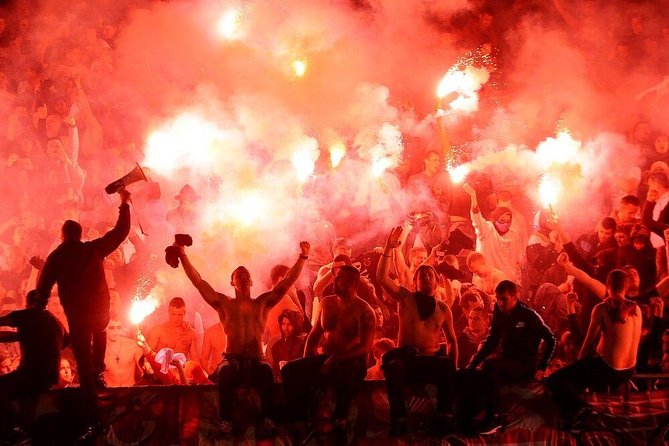
Belgrade’s football rivalry is painted across its walls, tied to its neighborhoods, and preserved inside two very different stadiums. This tour takes you from Partizan territory in Dorcol to Red Star ground in Senjak, then into both clubs’ homes for a close look at the city’s supporter culture.
I like the way the tour joins street art and local neighborhoods with stadium access. I also like the chance to see Red Star’s 1991 European Cup trophy and walk onto the Partizan pitch. The main drawback is that the tour is built around football culture and supporter history, so it may feel too specialized if you are not interested in soccer, politics, or the social role of fan groups.
Key Points Before You Book
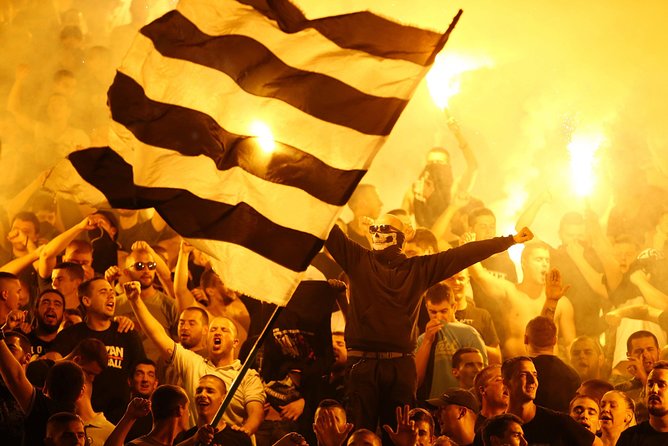
- Two rival clubs in one morning: Visit Red Star Belgrade and Partizan, rather than choosing only one side.
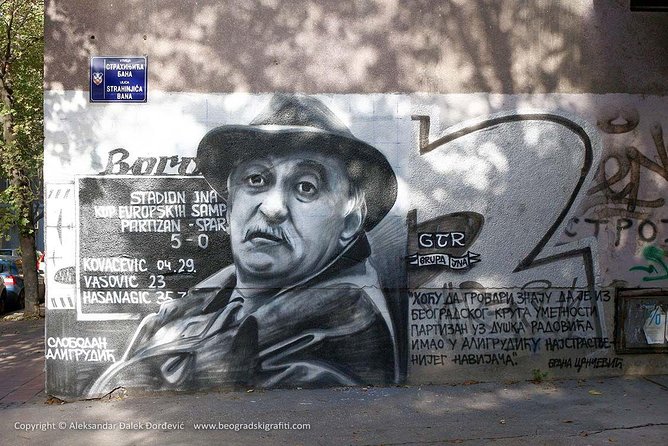
- Fan culture beyond the stadiums: See famous murals and graffiti in Dorcol and Senjak, including Red Star artwork dating from the 1990s.
- A major European trophy: Red Star’s museum includes the club’s 1991 Champions League trophy.
- A guide-led walking experience: Guides such as Andrija and Tihomir explain the football history and social effect of the ultras.
- Pitch and city views: The Partizan stop can include a walk down the pitch, with views across Belgrade.
- Good value for football fans: At $84.21 per person, the price pays for a focused half-day experience covering both clubs and several neighborhoods.
Why Belgrade Football Is a Way Into the City
This is not simply a stadium tour with a few photos at the end. It uses football to explain how Belgrade is divided into supporter territories, how murals work as public statements, and how two major clubs became part of Serbian identity.
That makes the opening walking section important. You are not rushed straight to a turnstile. You begin at Student Park, then move through parts of the city where club loyalty is visible on walls and in everyday surroundings.
The guide matters here. Andrija is singled out for his warmth, help with local sporting events, and ability to connect football with Serbian hospitality. Tihomir is noted for his strong grasp of ultras history and the social impact of the two rival groups. Guide assignments can vary, but both names give you a sense of the sort of person leading the experience: someone who treats football as a serious part of Belgrade life, not just a game.
The tour is offered in English and usually lasts about three to four hours. It begins at 10 a.m. at Student Park, Studentski trg 16, and returns to the same meeting point. That morning schedule leaves the rest of your day free for a match, a museum, or more time around central Belgrade.
A few more things to book in Belgrade
- History and Culture in my Belgrade
★ 5.0 · 41 reviews - NATO Bombing of Belgrade Historical Tour
★ 5.0 · 17 reviews - Tito and History Vintage Car Tour
★ 5.0 · 11 reviews
Dorcol: Partizan Territory With Bars and Graffiti
The first main stop is Dorcol, a central Belgrade neighborhood associated with Partizan supporters. You spend about an hour here, which is the longest street-level portion of the tour.
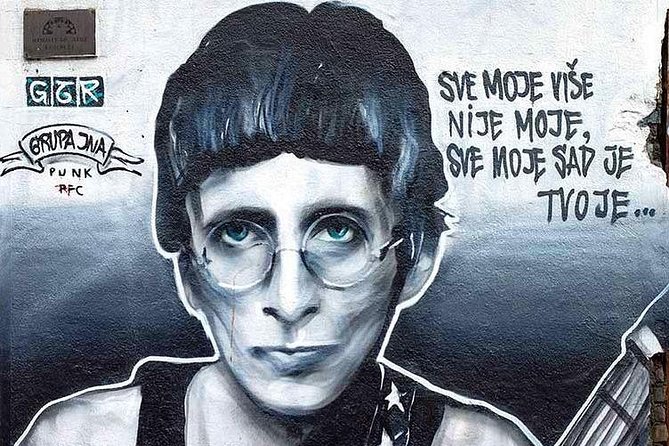
Dorcol is useful because it gives you more than football. It is also a pleasant area of bars, pubs, and older streets, so the stop has a normal neighborhood feel alongside the supporter markings. The famous graffiti dedicated to Partizan’s fan group gives the guide a place to explain symbols, rivalries, and the role of walls in fan culture.
I like this part because the football story is placed in its real setting. You are not looking at a display behind glass. You are walking through a district where the club identity is part of the public view.
The drawback is that graffiti is not a fixed museum exhibit. Its condition, visibility, and appearance can change. The point is the setting and the story behind the markings, not a perfectly preserved collection of murals.
Dorcol is also where the tour may feel most informal. You walk in the company of the guide, listen, and look around rather than follow a tightly staged presentation. Wear comfortable shoes and expect the experience to feel like a neighborhood walk with a strong football focus.
Senjak: Red Star’s Fan Neighborhood
After Dorcol, the tour visits Senjak, associated with Red Star supporters. This stop lasts about 20 minutes, so it is shorter and more concentrated than the Dorcol visit.
The main feature is old Red Star graffiti dating from the 1990s. The markings are described as being guarded by supporters around the clock, which shows how much meaning the location has within the club’s fan culture. Your guide can use the site to explain the rivalry from the Red Star side and compare it with what you saw in Dorcol.
The contrast between the two districts is one of the tour’s strongest ideas. Instead of presenting Red Star and Partizan as two abstract names, the tour links each club to a physical part of Belgrade. You get a better feel for how supporter identity can mark streets, walls, and local territory.
The short timing also tells you what to expect. Senjak is a focused stop, not a long neighborhood exploration. If you want extensive sightseeing in the district, this tour is not designed for that. Its purpose is to connect the graffiti with the wider football story before moving on to the stadiums.
Inside Red Star’s Marakana Stadium
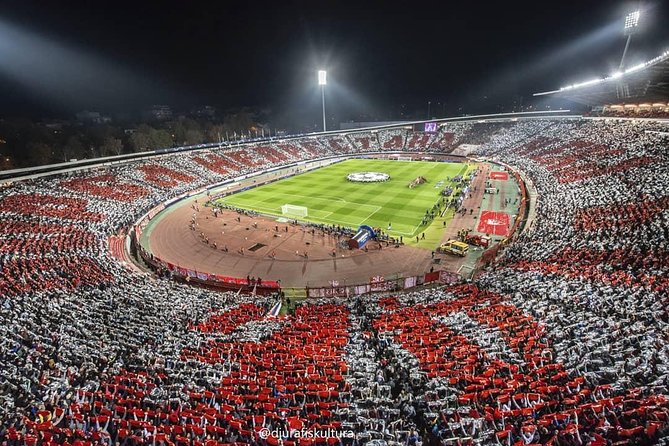
The Red Star Belgrade stadium, widely known as Marakana, receives about two hours of the tour. This is the main indoor and stadium-based section, and it should appeal to anyone interested in European club football.
The stadium museum contains trophies, flags, important club documents, and other material linked to Red Star. The prize piece is the 1991 European Cup, now called the Champions League trophy. Red Star is described as one of only two Eastern European clubs to have won that competition, along with Steaua Bucuresti.
That detail gives the museum real weight. You are not only seeing club memorabilia. You are seeing evidence of a rare achievement in European football, especially for a club from Eastern Europe. The trophy also helps explain why the club’s identity reaches beyond Belgrade.
The stadium visit is valuable because the guide can connect objects to events and people. On your own, a flag or document may be interesting. With context, it becomes part of the rivalry and the club’s place in Serbian sporting life.
The overview also mentions the chance to sip a beer inside one team’s stadium. The supplied information does not specify which stadium or exactly when the drink is served, so treat it as part of the planned experience rather than assume a particular bar or seating area.
The two-hour timing gives this stop more room than the brief neighborhood visits. Still, the tour is not a full match-day experience. You are learning about the club, seeing the museum, and exploring the stadium rather than watching a game.
One especially useful possibility comes from the way the tour can be handled by the guide. A previous booking was adapted to include the pitch and conference rooms at the stadiums. That does not guarantee the same access every time, but it is worth asking when you book if those areas are important to you.
Same city, a different kind of afternoon:
- Northern Serbia: Sremski Karlovci and Novi Sad Full-Day Tour from Belgrade
★ 5.0 · 425 reviews - Day Trip from Belgrade: Gems of Eastern Serbia
★ 5.0 · 424 reviews - Belgrade Nightlife Bar Pub Club Crawl with Drinks
★ 5.0 · 277 reviews - Taxi to/from Belgrade Airport to/from Belgrade City Center
★ 5.0 · 241 reviews
Partizan Stadium and the Pitch
The final listed stop is Partizan Stadium, with about 30 minutes set aside for the visit. Here the emphasis is more on the structure and feel of the ground than on a large museum collection.
You can walk down the pitch and see what is described as one of Europe’s last remaining ghetto stadiums. That phrase points to a rougher, more old-school atmosphere than the polished modern arenas found in many major football cities. The appeal is precisely its worn, direct character.
The stadium also offers striking views across Belgrade. That gives the stop value even if you are more interested in urban scenery than football history. From the ground, you can connect the city beyond the terraces with the rival neighborhoods visited earlier.
The Partizan visit is shorter than the Red Star section, so do not expect equal museum time at both clubs. The balance is intentional: Red Star provides the larger museum and trophy display, while Partizan gives you a closer physical sense of the pitch and stadium.
For a football fan, walking onto the field can be the moment that makes the tour feel personal. You are not only reading about famous matches or supporter groups. You are standing in the space where the club plays.
What the $84.21 Price Gets You
At $84.21 per person, this is not the cheapest way to see Belgrade. The value depends on how much you want the football story explained and how difficult it would be for you to arrange both stadium visits independently.
You are paying for roughly half a day with an English-speaking guide, transportation between several parts of the city as part of the guided outing, access to both club settings, and the guide’s interpretation of ultras culture. The tour also combines free neighborhood stops with the stadium experience, so the price is not based on admission tickets alone.
I think the cost is reasonable for a committed football fan. A self-guided visit might show you a stadium, but it would be harder to connect Dorcol, Senjak, the murals, the rival fan groups, and the clubs’ place in Serbian society. The guide is the main value.
For a casual soccer follower, the calculation is different. If you only want a quick stadium photograph, the three to four hours and the price may feel like too much. If you enjoy European football, supporter traditions, and the stories behind rival clubs, the tour offers more than a basic arena visit.
Group discounts are available, which may improve the price for families or larger parties. The maximum group size is listed as 99 people, a very high limit, so the actual feel of the tour can depend on the departure size. If you prefer a quiet, small-group discussion, ask about the group arrangement before booking.
Timing, Walking, and Practical Details
The meeting point is Student Park at Studentski trg 16. The tour starts at 10 a.m. and ends back at the same place, making it easy to plan a later activity in central Belgrade.
The experience includes walking through Dorcol, Senjak, and the stadium areas. Most people can participate, and service animals are allowed. Public transportation is nearby, which is useful for reaching the start without arranging a private ride.
The tour requires good weather. If poor weather causes cancellation, you can take a different date or receive a full refund. You can also cancel for a full refund up to 24 hours before the local start time. After that point, the amount paid is not refunded, and changes made inside the 24-hour window are not accepted.
A mobile ticket is available. Confirmation is provided when you book, and the tour is conducted in English.
You should wear shoes suitable for walking and allow the full morning rather than planning something with a tight deadline. The exact pace may vary because some parts take place outdoors and the stadium access can shape the schedule.
Who Will Enjoy This Tour Most
I would recommend this experience to:
- Fans of European football and historic club rivalries
- People curious about ultras culture and its social role
- Visitors who prefer local neighborhoods to a standard sightseeing route
- Anyone interested in seeing both Red Star and Partizan in one outing
- Football fans who want a guide rather than a self-guided stadium visit
It is less suited to someone who wants a broad introduction to Belgrade’s main sights. The tour focuses on football, supporter groups, stadiums, and the neighborhoods tied to them. You will learn about the city through that lens, not through a general history tour.
It may also be a strong choice if you are attending a Red Star or Partizan match later in your stay. One guide, Andrija, helped arrange a Red Star game for a participant and later attended a basketball game with them. That level of personal help is not guaranteed, but it shows how a football-focused guide may offer useful local connections beyond the scheduled route.
Should You Book the Red Star and Partizan Tour?
Book it if you want to understand why football matters so much in Belgrade, not just where the two clubs play. The combination of Dorcol graffiti, Senjak’s old Red Star markings, Marakana’s 1991 European Cup trophy, and the Partizan pitch gives you a clear view of the rivalry from both sides.
The strongest parts are the guides, the supporter-focused context, and the chance to visit both stadiums in one morning. The main caution is the price and the specialized subject. You are paying for interpretation and access, not a general city tour.
For a serious football fan, I think the $84.21 is fair. For everyone else, book only if the social side of football sounds as interesting as the sport itself.
FAQ
How long does the football tour last?
The tour lasts approximately three to four hours.
Where does the tour begin?
It begins at Student Park, Studentski trg 16, Belgrade 11000, Serbia.
What time does the tour start?
The stated start time is 10 a.m.
Where does the tour end?
The activity ends back at the meeting point at Student Park.
Is the tour offered in English?
Yes. The tour is offered in English.
Which stadiums are visited?
The tour visits Red Star Belgrade Stadium, known as Marakana, and Partizan Stadium.
Can I see Red Star’s 1991 European Cup trophy?
Yes. The Red Star museum includes the club’s 1991 Champions League trophy.
Can I cancel for a full refund?
Yes. You can cancel up to 24 hours before the local start time for a full refund. If poor weather causes the activity to be canceled, you will be offered another date or a full refund.
Just added in Belgrade
- Belgrade Layover Private tour + E-Scooter Sighteeing★ 5.0 · 6 reviews
- Belgrade Insight Private Tour – For Those Who Seek Answers★ 5.0 · 6 reviews
- Belgrade Private Driving & Walking Tour★ 5.0 · 4 reviews
- Belgrade Fashion and Design Tour – Discover Local Designers★ 5.0 · 4 reviews
- 4-Hour Belgrade Private Grand City Walking Tour★ 5.0 · 8 reviews
- Belgrade Local Craft Beer Tasting Tour★ 5.0 · 8 reviews
- Belgrade Chuggalong – Pub Crawl★ 4.0 · 8 reviews
- Ada Lake Tour★ 5.0 · 7 reviews
Historical Tours, compared.
Browse the lists this tour appears in