
Reviewed · WALKING TOURS
Belgrade Walking Tour in French
Belgrade reveals itself unusually well through a French-speaking journalist. Nenad mixes Serbian history, daily life, politics, culture, and personal anecdotes as you walk from Republic Square toward the fortress and the French quarter. This is not just a monument checklist. You’ll hear why Belgrade looks the way it does, how Ottoman rule shaped the city, and why France holds a special place in Serbian memory.
I especially like the small maximum of eight people, which should make it easier to ask questions and keep the pace conversational. I also like the French connection woven through the route, from the starting point near rue de France to the Monument of Gratitude to France, the French Embassy, and the ending near rue de Paris.
The main consideration is the pace. Three and a half hours on foot, with many historical explanations and several outdoor stops, may feel long if you prefer a quick introduction. The advertised price of $43.94 per person is fair for a specialized French-language tour, but less attractive if you only want a short orientation.
Key points to know
- French-speaking journalist Nenad: Expect Serbian history and current life explained in fluent French, with personal anecdotes from his work in journalism.
- A route with real variety: Republic Square, Skadarlija, Dorćol, the only mosque in Belgrade, the fortress, Kalemegdan, French landmarks, and old royal buildings all fit into one walk.
- Small-group format: The tour accepts no more than eight people, a useful advantage for questions and conversation.
- A strong Ottoman and Franco-Serbian focus: You’ll connect the fortress and mosque to Ottoman influence, then trace French-Serbian friendship from the First World War onward.
- Useful first-day timing: The 9:30 a.m. start gives you a three-and-a-half-hour introduction before the rest of your day.
- Free cancellation up to 24 hours ahead: Changes made inside the final 24 hours are not refundable.
Republic Square gives you a quick start in central Belgrade
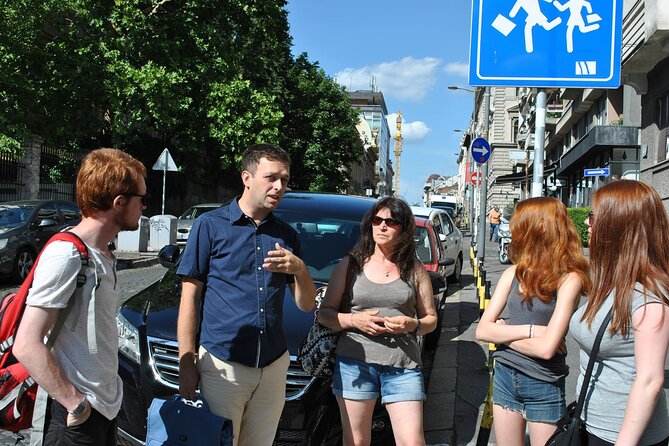
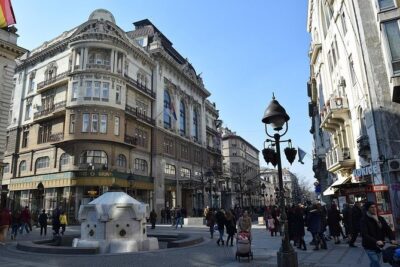
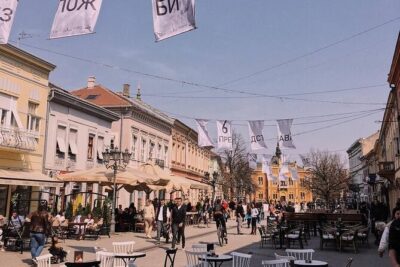
Meet Nenad at Republic Square, Trg republike 3, at 9:30 a.m. This is a practical place to begin because the square gathers several of Belgrade’s major cultural markers in one spot: the monument to Prince Mihailo, the National Theatre, and the National Museum.
The opening explanation helps you place Belgrade within Serbia rather than treating it as a collection of attractive façades. Prince Mihailo’s monument points to the modern Serbian state, while the theatre and museum introduce the city’s public culture. You’ll spend about 15 minutes here, enough for context without getting stuck in a long lecture.
This first stop also sets the tone for the walk. Nenad’s approach combines tourism with journalism, so you can expect more than dates and names. The aim is to connect the official city, the city people live in now, and the stories that do not always appear in a standard guidebook.
Other walks around Belgrade:
- Belgrade: 3-Hour Small Group Walking Tour
★ 5.0 · 180 reviews - Half-Day Sightseeing and Walking Tour of Belgrade City
★ 5.0 · 37 reviews - Belgrade City Walk, Gathering and Sightseeing
★ 5.0 · 19 reviews
Skadarlija brings out Belgrade’s bohemian side
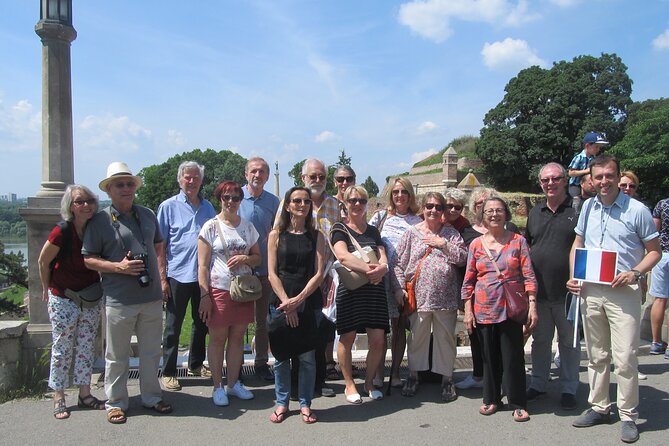
From Republic Square, the route continues toward Skadarska Street in the old bohemian quarter. Skadarlija is often compared with Montmartre, and the connection is not entirely decorative: Skadarska Street is twinned with Montmartre and has long carried an artistic, restaurant-filled identity.
You’ll spend about 10 minutes here, so think of this as a compact introduction rather than a full meal or nightlife stop. The value is in understanding how a short, distinctive street fits into Belgrade’s social history. Its character gives you a contrast with the formal buildings around Republic Square.
The French thread appears early, too. The tour uses rue de France and nearby Skadarska Street as part of a wider story about Francophonie in Serbia. If you are interested in the way cultural links survive through street names, monuments, and public memory, this part gives the tour a clear purpose beyond sightseeing.
Dorćol explains Belgrade’s layered appearance
The walk then heads into Dorćol, one of old Belgrade’s central districts. Here you’ll look closely at street plates and signs, and Nenad will help you read the Cyrillic alphabet. That small lesson may be one of the most useful parts of the morning. You do not need to become fluent, but recognizing a few letters makes Serbian streets less mysterious for the rest of your stay.
Dorćol is also a good place to notice the city’s mixed architectural character. Its buildings reflect several periods and influences rather than one tidy design plan. The result can look uneven, but that is part of Belgrade’s appeal. You may see different styles sharing the same block, with the outside of the district showing how the city changed over time.
The route includes Belgrade’s only mosque. This gives Nenad a natural opening to discuss the Ottoman period and the influence of Ottoman rule on Serbian culture. It is an important corrective to the idea that Serbia’s story can be understood only through its Christian and European connections.
Because the tour does not list a separate admission ticket for this stop, expect a walk-through explanation rather than a long interior visit. Pay attention to the signs and surrounding buildings. Dorćol rewards looking up and around, not just waiting for the next famous monument.
Ruzica Church has an unusual military past
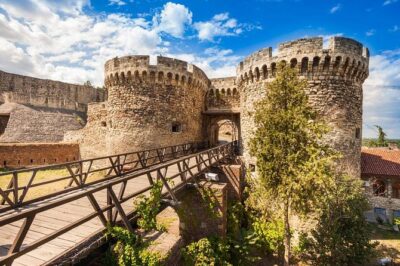
Inside the Belgrade citadel, Ruzica Church offers one of the route’s more surprising details. The building began as a gunpowder warehouse and was converted into a military church between 1867 and 1869.
That change in use says a lot about the fortress. This was not simply a scenic park with old walls. It was a working military site, altered as power shifted and the city’s needs changed. A short stop of about 10 minutes is enough to explain the building’s unusual past and place it within the larger fortress complex.
I like this kind of stop because it gives you a concrete story. Instead of hearing only that the fortress is old, you learn how one particular building changed function. It also keeps the route from becoming a procession of statues and grand viewpoints.
Same city, a different kind of afternoon:
- Northern Serbia: Sremski Karlovci and Novi Sad Full-Day Tour from Belgrade
★ 5.0 · 425 reviews - Day Trip from Belgrade: Gems of Eastern Serbia
★ 5.0 · 424 reviews - Belgrade Nightlife Bar Pub Club Crawl with Drinks
★ 5.0 · 277 reviews - Taxi to/from Belgrade Airport to/from Belgrade City Center
★ 5.0 · 241 reviews
Kalemegdan offers the tour’s big view
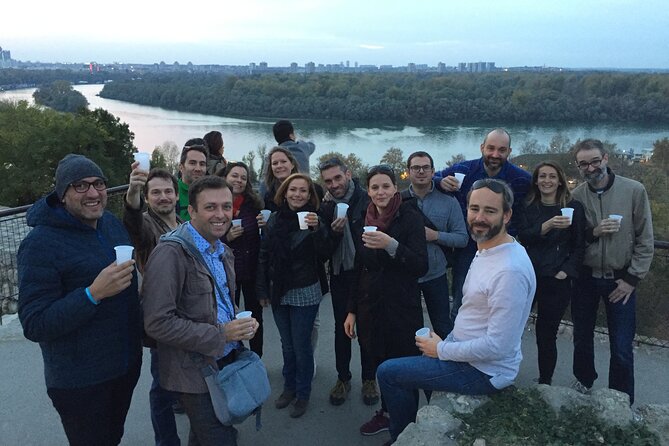
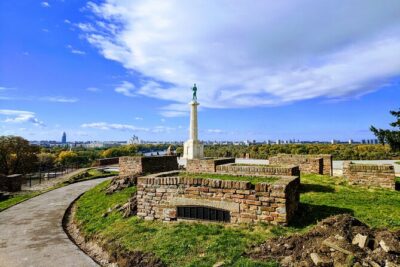
The fortress and Kalemegdan Park are the visual high point of the walk. From here, you can look toward the meeting point of the Sava and Danube, a view that helps explain Belgrade’s strategic importance. Rivers shaped the city’s trade, defenses, borders, and military history.
You’ll spend about 15 minutes on the main explanation, with special attention to the Ottoman era and its lasting influence on Serbian culture. This is where earlier stops begin to connect. The mosque, the fortress, military buildings, and mixed urban styles are not isolated curiosities. They reflect the city’s long position between different political and cultural worlds.
The view is also a useful pause after the denser streets of central Belgrade. Bring comfortable shoes, since the experience is a walking tour and the fortress area adds outdoor paths and open space to the city streets. The schedule does not promise a long rest break, so pace yourself and bring anything you normally need for several hours outside.
The Monument of Gratitude to France adds a personal connection
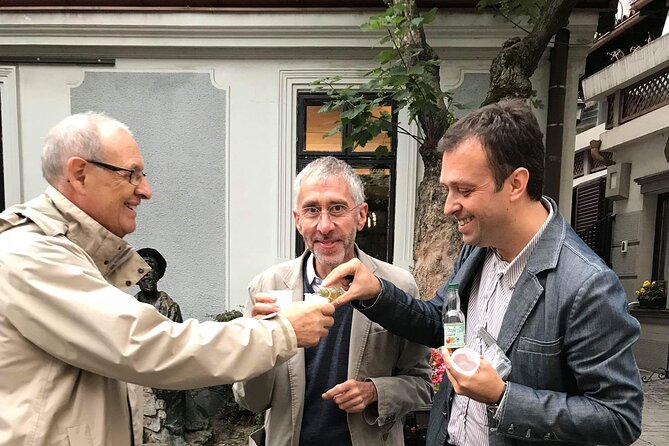
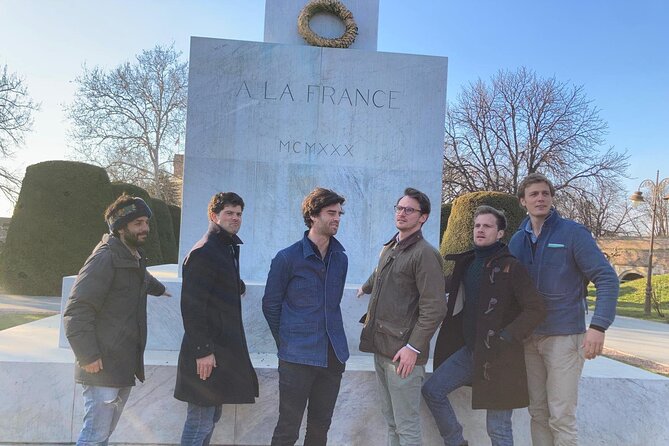
Before the tour ends, you’ll visit the Monument of Gratitude to France. This is the clearest expression of the French-Serbian relationship on the route, with stories reaching back to the First World War.
The monument matters because the tour does not treat Francophonie as a language service only. French influence is built into the route itself. You begin near rue de France, hear about historical friendship, pass the French Embassy, and finish near rue de Paris. Those details give the French-language experience a physical shape across the city.
You’ll spend around 10 minutes at the monument. That is enough time for a focused explanation, though not enough for an extended lecture on every stage of French-Serbian relations. If this subject is central to your interests, ask questions while you are there. The small group should make that easier.
The French Embassy and King Peter Street close the loop
The walk passes the French Embassy, a notable interwar building shaped by monumental classicism and detailed sculpture. The route uses the building to continue the story of French connections in Serbia, rather than treating the embassy as a quick photo stop.
The final section includes King Peter I Street, named for a French-speaking Serbian king. You’ll also pass Princess Ljubica’s mansion and what is described as Belgrade’s oldest restaurant. These places bring the tour back to the city’s civic and royal past after the fortress and Ottoman-focused sections.
The advertised endpoint is Kneza Mihaila 49, at the crossroads of Kneza Mihaila and Kralja Petra streets. Ending here is useful because you remain in central Belgrade, near major pedestrian streets and further sightseeing. The route begins on Republic Square and finishes not far from rue de Paris, giving the walk a clear French-to-French frame.
What Nenad’s style means for your experience
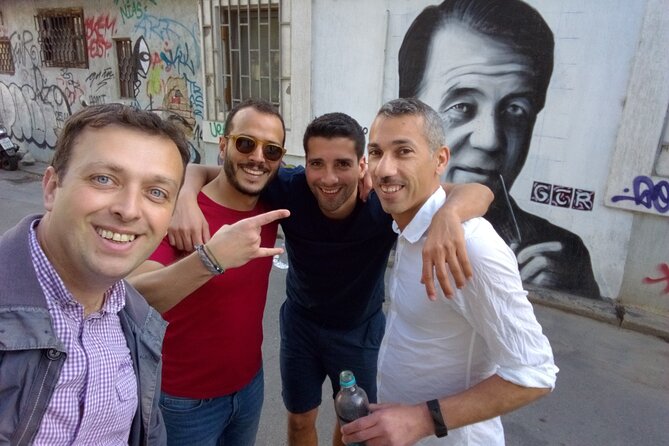
Nenad is presented as a French-speaking journalist, not simply a guide reciting a prepared script. That distinction matters. You can expect the tour to include current Serbian life, unusual addresses, and anecdotes gathered during his journalism work, along with the standard landmarks.
Several details point to a flexible, conversational style. He is described as answering many questions, showing places that are easy to miss in standard books, and helping people appreciate Belgrade and Serbia as a whole. One account also describes him picking up visitors at their accommodation, but the stated meeting point for this experience is Republic Square. If pickup matters to you, ask before booking rather than assuming it is included.
You should also expect the tour to work best when you participate. Ask about the Cyrillic signs, the Ottoman influence, the French relationship, or the less visible side of Belgrade that Nenad calls the city’s underside. The more you ask, the more useful a journalist-led walk can become.
Is $43.94 good value for three and a half hours?
At $43.94 per person, the cost is reasonable for a specialized private-feeling walking experience capped at eight people, though it is not the cheapest way to see central Belgrade. There are no separate admission charges listed for the stops, so the main thing you are paying for is Nenad’s time, French-language delivery, route design, and interpretation.
The strongest value comes if you want to understand the city rather than simply photograph it. You are getting a broad route, a language-specific guide, a Cyrillic introduction, fortress views, Ottoman context, and a sustained French-Serbian theme. A general group walk may cover some of the same streets, but it is less likely to tie them together in this way.
The value is weaker if you want extended time inside museums, churches, or the fortress itself. The schedule gives short stops, usually 10 to 15 minutes, and does not list museum entry. Think of this as a guided orientation with depth, not a series of long interior visits.
Who should book this French-language walk?
I would choose this tour if you speak French and want Belgrade explained in a language that lets you ask nuanced questions. It suits first-time visitors who want a strong central-city introduction, especially those interested in Serbia’s complicated position between Ottoman, European, royal, military, and modern influences.
It also fits people who normally skip organized tours but would welcome a small group and a guide with a journalist’s angle. The route includes familiar highlights, but the emphasis on unusual addresses and less obvious stories keeps it from feeling like a basic checklist.
You may want something else if you dislike long walks, prefer a slow museum visit, or need a tour in another language. The three-and-a-half-hour duration is substantial, and the itinerary contains a lot of information. Families and older visitors can participate according to the stated information, but everyone should be comfortable walking through central streets and outdoor fortress areas.
The tour has a 5.0 rating from six published ratings, a very small sample, so I would treat that as encouraging rather than definitive. The repeated strengths are clear: French fluency, Nenad’s personal stories, unusual city details, and a strong ability to connect Belgrade with the wider story of Serbia.
Should you book the Belgrade Walking Tour in French?
Book it if you want Belgrade explained in French by someone who connects history with present-day life. The route is broad, the group is small, and the French theme is built into the streets, monuments, embassy, and endpoint rather than added as an afterthought.
I would place it early in your stay, ideally on a morning when you can use the landmarks and neighborhood suggestions afterward. At $43.94, it is a sensible buy for French-speaking visitors who value interpretation and conversation. Skip it if you want a short, low-cost stroll or long visits inside individual attractions.
FAQ
How long is the Belgrade Walking Tour in French?
The tour lasts approximately three hours and 30 minutes.
What time does the tour start?
It starts at 9:30 a.m.
Where does the tour begin?
The meeting point is Republic Square, Trg republike 3, in Belgrade.
Where does the tour finish?
It ends at Kneza Mihaila 49, at the crossroads of Kneza Mihaila and Kralja Petra streets.
Who leads the tour?
The tour is led by Nenad, a French-speaking journalist.
How many people can join?
The maximum group size is eight people.
Is the tour offered in French?
Yes. The experience is conducted in French and focuses on Belgrade, Serbian culture, current life in Serbia, and the history of Francophonie in Serbia.
Can I cancel for a full refund?
Yes. You can cancel at least 24 hours before the local start time for a full refund. Cancellations or changes made less than 24 hours before the start are not refunded or accepted.
Just added in Belgrade
- Private Half Day Serbia Tour Novi Sad and Petrovaradin Fortress★ 5.0 · 3 reviews
- Private Belgrade Street Art and Adventures Walking Tour★ 5.0 · 4 reviews
- From Belgrade:Uvac Nature Reserve Tour★ 5.0 · 4 reviews
- Private Wine Tasting by Party in Belgrade★ 5.0 · 3 reviews
- Urban & Alternative Belgrade tour★ 5.0 · 4 reviews
- Shooting Experience by Party in Belgrade★ 5.0 · 8 reviews
- Transportation from Belgrade or Belgrade Airport to Tara, Mokra Gora or Sagan 8★ 5.0 · 6 reviews
- Belgrade Bike Tour: Be a local in the hood of Belgrade!★ 5.0 · 5 reviews
Walking Tours, compared.
Half-Day Sightseeing and Walking Tour of Belgrade City
Read our review →
Browse the lists this tour appears in