
Reviewed · WALKING TOURS
Belgrade City Walk, Gathering and Sightseeing
Belgrade’s story comes at you in layers on this compact walk: royal palaces, Serbian churches, Ottoman-era defenses, Yugoslav state buildings, and the meeting point of the Sava and Danube. Guide Aleksandar Bastic connects those sights with local history, customs, and a cup of coffee, giving you a useful first map of the city.
I like the small maximum of six people, which should make it easier to ask questions and keep the pace comfortable. I also like the mix of major sights and local context, from the Serbian autonomy proclamation site to coffee at Hotel Moskva. The main caution is that one booking reports the walk becoming more political than expected and not following the listed route closely, so tell Aleksandar at the start what you most want to see.
Key points to know before you book
- Coffee is part of the experience: A complimentary hot drink adds a real Serbian ritual to the sightseeing.
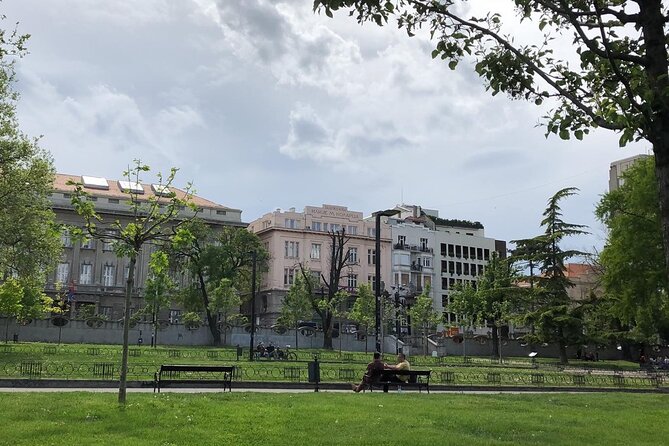
- The route covers central Belgrade: You’ll see St. Mark’s Church, the National Assembly, royal buildings, Republic Square, Kalemegdan, and the Victor monument.
- Aleksandar Bastic leads the walk: His explanations focus on Serbian history, culture, customs, and local identity.
- The group is capped at six: This is a better fit for conversation than a large coach-style city tour.
- Plan for two to three hours on foot: There is no transportation included, so wear shoes suited to a city walk.
- The tour ends near Knez Mihailova Street: You finish at the Belgrade City Library, a handy point for continuing your own exploration.
Why this walk works as a first look at Belgrade
This is an orientation tour, not a museum-heavy excursion. You move through central Belgrade while Aleksandar explains how Serbia’s political, religious, and cultural story shaped the streets around you. That makes the walk especially useful early in a stay, when you want to learn where the main sights are before returning to them at your own pace.
The route covers a lot for its two-to-three-hour length. You get formal buildings, a church, a grand hotel, public squares, a fortress park, and a famous monument. The variety keeps the walk from feeling like a long parade of similar facades.
I would not book this if you want long interior visits at every stop. Several locations are viewed from outside, and the stated time at each place is often short. Think of the experience as a guided city framework. You get the story and location first, then choose which places deserve a closer visit later.
The English-language format and small group help. With a maximum of six people, Aleksandar can adjust his explanations and answer questions without a crowd slowing things down. The published start time is 11 a.m., and the average booking lead time is eight days, so reserving ahead makes sense if your schedule is tight.
Other walks around Belgrade:
- Belgrade: 3-Hour Small Group Walking Tour
★ 5.0 · 180 reviews - Half-Day Sightseeing and Walking Tour of Belgrade City
★ 5.0 · 37 reviews - Belgrade Private Walking Tour with a Local
★ 5.0 · 19 reviews
St. Mark’s Church and the story of Serbian autonomy
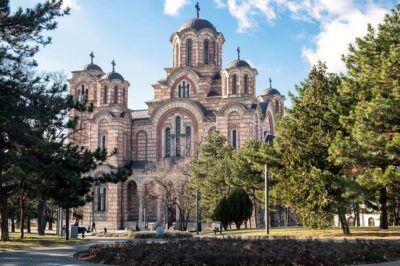
The walk begins at Crkva Svetog Marka, or St. Mark’s Church. You have about 20 minutes here, with admission included. The church is important not only for its architecture and religious role but also for the people connected with it.
The church holds the remains of Milan Obrenovic, the eldest son of Milos Obrenovic, along with King Alexander I Obrenovic and Queen Draga. Aleksandar can use those burials to explain the Obrenovic dynasty and the political shifts that shaped Serbia.
The location also carries national meaning. In 1830, the sultan’s edict announcing Serbian autonomy within the Ottoman Empire was read on the site where the church now stands. That single fact gives the stop unusual weight. You are not simply looking at a church. You are standing at a place tied to Serbia’s move toward greater self-rule.
This is one of the tour’s better early stops because it gives you a historical key for the rest of the walk. Later royal buildings and state institutions make more sense after you have heard how Serbia developed its own political identity.
The National Assembly and the Old Palace
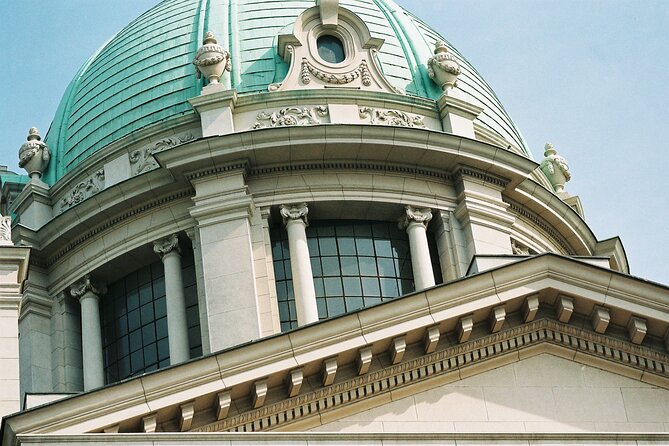
The next stop is the House of the National Assembly of the Republic of Serbia, a grand building with a long construction story. Work began in 1907 and continued, with interruptions and design changes, until 1936. Several important Serbian architects took part, including Konstantin A. Jovanovic and Jovan Ilkic.
You have about 15 minutes here, and admission is not included. The value is in the exterior and the explanation rather than an interior tour. Aleksandar can point out how the building reflects the ambitions of the former Kingdom of Yugoslavia and the changing political life of Serbia.
The stop pairs well with the Old Palace, which takes another 15 minutes. Built between 1882 and 1884 for the Obrenovic dynasty, the palace now houses the City Assembly of Belgrade. Its academist exterior is one of the notable 19th-century architectural works in Serbia.
I like this section because the buildings are not presented as isolated photo stops. Together, they show how power was displayed through architecture. One building represents parliamentary life, while the other recalls royal rule and the city’s later civic government.
You should keep your expectations realistic. The schedule gives you time to see the buildings and hear the main story, but not to study every architectural detail. If one of these buildings catches your eye, note its location for a later visit.
Hotel Moskva and the ritual of Serbian coffee

Hotel Moskva adds a lighter and more social pause to the route. Built in 1908 on Terazije Square, this 123-room hotel is protected as a cultural monument. Its Russian Secession style gives it a distinctive look, and the building includes a well-known café, restaurant, and spa.
The hotel has hosted public figures including Albert Einstein and Robert De Niro. You do not need to be interested in celebrity history to enjoy the stop, though. The more useful part is the chance to understand why coffee matters in Serbia.
Coffee here is described as a ritual, not merely a quick drink. The complimentary coffee or tea gives the walk a natural break and lets you experience that custom in a social setting. One especially positive account singled out coffee at Hotel Moskva as the highlight, so this may become your favorite part if you enjoy food and café culture as much as monuments.
The exact timing of the drink is not separately stated, but it is included in the experience. Since the hotel café is a popular stop, I would treat the beverage as a pleasant part of the walk rather than assume you are receiving a full café visit with unlimited time.
A few more things to book in Belgrade
- Taxi to/from Belgrade Airport to/from Belgrade City Center
★ 5.0 · 241 reviews - Belgrade Private City Tour
★ 5.0 · 41 reviews - Belgrade Airport to City Center Transfers
★ 5.0 · 39 reviews - Your Own Belgrade: Unexpected Treasures of the City
★ 5.0 · 16 reviews
Republic Square and the city’s everyday meeting point
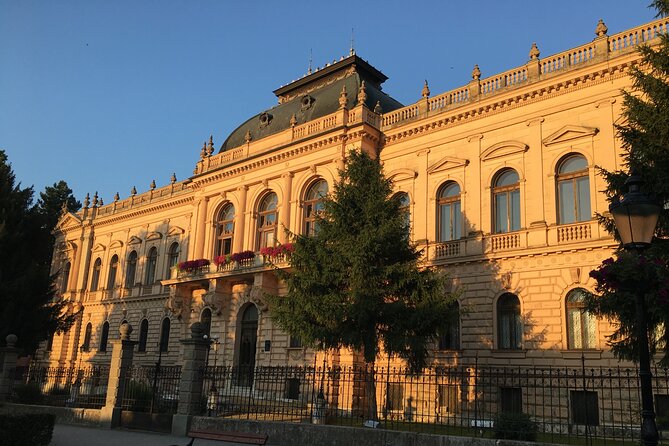
Republic Square, or Trg Republike, is the main meeting point for Belgrade residents. It now occupies the area where gates leading into the city once stood. That contrast gives Aleksandar an easy way to explain how Belgrade shifted from a defended settlement to a modern capital.
This is a useful stop for orientation. You are in the heart of central Belgrade, close to important pedestrian areas and city attractions. The square also helps you understand local life beyond formal landmarks. It is a place people use, not only a place people photograph.
The scheduled time is about 15 minutes, with admission not included because this is an outdoor public space. Listen for practical suggestions about the surrounding area, then use the square as a reference point when you explore on your own.
The tour also promises discussion of Serbian roots, religion, mentality, history, and heritage. That broad cultural layer is one reason to choose a local guide instead of relying only on a map. You will hear how national customs and beliefs connect with the places you are seeing.
Nebojsa Tower and Serbian customs
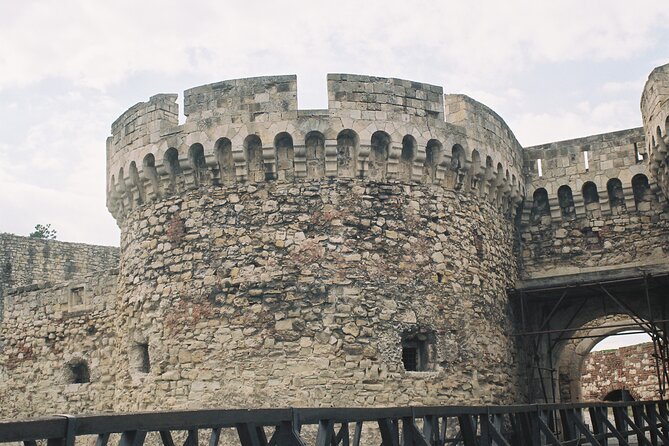
Nebojsa Tower receives about 25 minutes, with admission listed as free. The supplied description emphasizes Serbian customs and celebrations, including traditions that are specific to the country. That makes this stop less about a quick architectural view and more about cultural explanation.
The available details do not promise an interior visit, so I would ask Aleksandar at the start whether the schedule includes going inside or viewing the tower from outside. Either way, the stop gives the walk room to move beyond political history.
This is important because Belgrade can be easy to reduce to battles, dynasties, and changing borders. Customs and celebrations show another side of the country. If you are curious about how people mark important events or how religion influences daily life, this part of the conversation may be especially useful.
Kalemegdan Park, the fortress, and the river meeting point
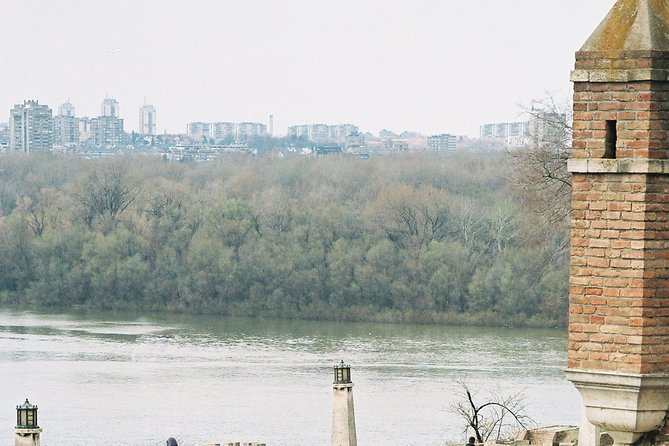
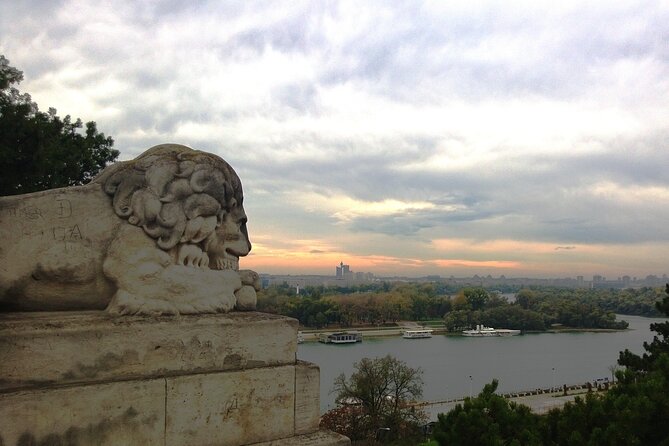
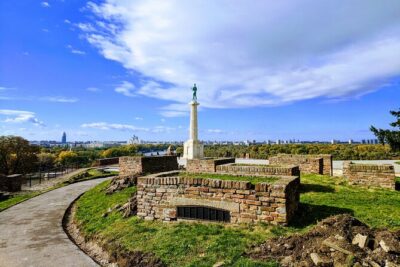
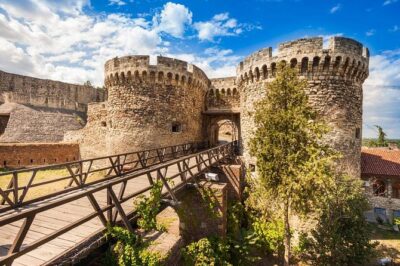
The longest scheduled stop is Kalemegdan Park and Belgrade Fortress, with about 45 minutes. That is the core of the walk. The fortress includes the old citadel and the park at the meeting point of the Sava and Danube rivers.
This area forms the historic center of Belgrade. Its importance comes from both the defensive site and the open park around it. You get a break from city streets while still standing in the middle of the capital.
The fortress is where the city’s layered past becomes easiest to picture. Its position at the rivers helps explain why this ground mattered for defense and settlement. Aleksandar’s explanations can tie the site to the wider history of Belgrade, while the park gives you space to take in the setting.
The 45-minute allotment is helpful, but it is still not enough for every corner of the fortress and park. If you want a slow visit, return later. I would mark the spots that interest you most and plan a second visit when you are not following a group schedule.
This is also where comfortable shoes matter most. The experience is a walking tour with no transportation included. The total duration is manageable, but the route includes several stops and the fortress area is larger than a single photo point.
The Victor monument and the final view
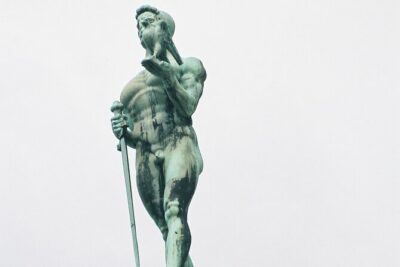
The walk continues to Pobednik, the Victor monument, one of Belgrade’s most recognized symbols. You have about 15 minutes here, with admission not included.
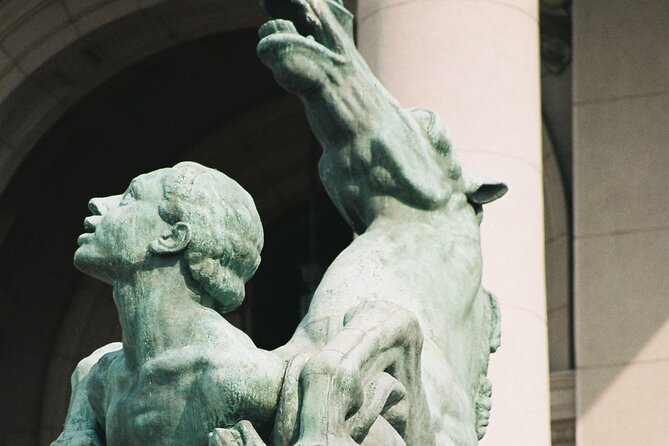
The monument was designed by sculptor Ivan Mestrovic. It honors the Serbian army’s victory in the Balkan Wars and was first imagined as part of a fountain in central Belgrade on Terazije. The sculpture shows a nude male figure holding a sword in one hand, symbolizing war, and a falcon in the other, symbolizing peace.
Its creation began before the First World War but took an unusually long time. That delayed story gives Aleksandar another chance to explain how monuments can carry political meaning long after the event they commemorate.
The Victor is a strong final stop because it brings together several themes from the walk: Serbia’s military past, public memory, national symbols, and the role of Ivan Mestrovic in the country’s artistic story. From here, the route ends on Knez Mihailova Street, in front of the Belgrade City Library at number 54a.
That ending is practical. You are left in a central pedestrian area rather than at an out-of-the-way transport point. The tour begins at Kosovska 47 and finishes at the library, so you should be prepared to make your own way to the start and continue independently after the end.
What the $38.41 price buys you
At $38.41 per person, this is not the cheapest way to see Belgrade’s center, since you can walk past many of the sights on your own. The value comes from the explanation, the route planning, the small group, and the included hot drink.
The price looks stronger if you are new to Belgrade and want a local introduction without committing to a full-day activity. You cover many major points in two to three hours, then have the rest of the day to revisit the places that interest you.
It is also a reasonable choice if you like asking questions. A group capped at six is much more personal than a large city tour. The positive feedback consistently emphasizes Aleksandar’s enthusiasm, clear explanations, local knowledge, and ability to share little-known facts. One account also praised the easy pace, which should suit anyone who prefers steady walking rather than a rushed march between stops.
There is one important qualification. One booking describes the experience as disappointing because the discussion felt more political than historical and the advertised route was not followed. That is a minority view within the supplied ratings, which show 95 percent recommendation and a 4.8 rating from 19 reviews, but it is still useful information. At the beginning, confirm that you want the listed sightseeing route and say which subjects interest you most.
Who should take this Belgrade walk?
I would suggest it to first-time visitors, solo explorers, couples, and anyone who wants a compact introduction before exploring further. It suits people who care about the story behind buildings, not only their appearance.
It also fits travelers who enjoy a guide with personality. Aleksandar is repeatedly described as warm, enthusiastic, clear, and passionate about Serbia. Several strong accounts note that he responds to individual interests and shares facts beyond the basic sightseeing script.
You may want something else if you need extensive interior access, a purely architectural tour, or a tightly fixed schedule with no room for discussion. The tour’s strength is its broad look at Belgrade and its culture. That breadth means individual stops receive limited time.
Weather is another small consideration. The walk can continue in light rain, but the route is outdoors and the schedule does not list indoor alternatives. Bring suitable clothing for the day and shoes for several hours on foot.
Final verdict: a useful first three hours in Belgrade
Book this walk if you want to get your bearings, understand the basic shape of Serbian history, and see a generous list of central sights in one morning. The small group, English explanations, coffee ritual, and fortress visit give it more character than a simple landmark checklist.
I would be clear with Aleksandar about your priorities at the beginning, especially if you want the published route followed closely. At $38.41, the tour earns its price through access to local context rather than admission tickets. For a first day in Belgrade, that can be a smart trade.
Free cancellation is available if you cancel at least 24 hours before the 11 a.m. start time. The activity also requires a minimum number of participants, with a full refund or another option offered if it is canceled for that reason.
FAQ
How long does the Belgrade City Walk last?
The walk lasts approximately two to three hours.
What time does the tour start?
The tour starts at 11 a.m.
Where does the tour begin?
The meeting point is Kosovska 47, Belgrade 11000, Serbia.
Where does the tour end?
The tour ends at the Belgrade City Library, at 56 Knez Mihailova Street in central Belgrade.
Is transportation included?
No. Transportation is not included, so you should plan to reach the starting point independently and continue on your own after the walk.
Is the tour offered in English?
Yes. The experience is offered in English.
What is included in the price?
Coffee or tea is included. The tour also includes admission at St. Mark’s Church, while admission is not included at some other listed stops.
How large is the group?
The activity has a maximum of six participants.
Can I cancel for a full refund?
Yes, if you cancel at least 24 hours before the experience start time. Cancellations or changes made less than 24 hours before the start are not refunded.
Just added in Belgrade
- Belgrade Layover Private tour + E-Scooter Sighteeing★ 5.0 · 6 reviews
- Belgrade Insight Private Tour – For Those Who Seek Answers★ 5.0 · 6 reviews
- Belgrade Private Driving & Walking Tour★ 5.0 · 4 reviews
- Belgrade Fashion and Design Tour – Discover Local Designers★ 5.0 · 4 reviews
- 4-Hour Belgrade Private Grand City Walking Tour★ 5.0 · 8 reviews
- Belgrade Local Craft Beer Tasting Tour★ 5.0 · 8 reviews
- Belgrade Chuggalong – Pub Crawl★ 4.0 · 8 reviews
- Ada Lake Tour★ 5.0 · 7 reviews
Walking Tours, compared.
Half-Day Sightseeing and Walking Tour of Belgrade City
Read our review →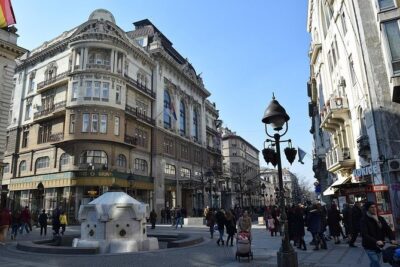
Belgrade center walking tour with Rakija, Cocktails and Burgers
Read our review →Browse the lists this tour appears in