
Reviewed · COMMUNIST & YUGOSLAV HISTORY TOURS
Underground Secrets of Belgrade
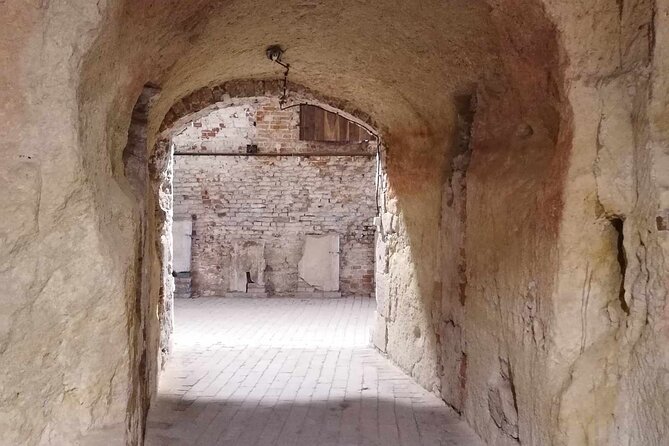
Belgrade keeps some of its best stories below street level. This tour takes you from the fortress’s 51-meter Roman Well to a Cold War bunker, an Austrian gunpowder storehouse, and old food caverns ending in a wine cellar. It is a compact way to see a side of the city that ordinary sightseeing misses.
I like the mix of periods, from Roman and Byzantine remains to 20th-century military history. I also like the finish: a free glass of wine at the winery on Karađorđeva Street gives the walk a friendly local ending rather than simply dropping you back on a pavement.
The main caution is physical difficulty. Narrow, steep stairs, uneven ground, and sections without handrails can make this a poor fit for anyone with limited mobility. One guest also found the English hard to follow, so your experience may depend quite a bit on the guide leading your departure.
Key points to know before you book
- The Roman Well is the star attraction: Two spiral staircases meet about 35 meters down, creating a striking DNA-like form.
- You see a Cold War bunker that was never used: It offers a sharp change from old stone ruins to modern military anxiety.
- Barutana is a man-made cave: Its Lapidarium displays Roman and Byzantine sarcophagi, gravestones, and statues.
- The tour finishes with wine: Your final stop is a 19th-century cellar and winery at Karađorđeva 31.
- Expect a small-group walk: The maximum group size is 20, and the tour is offered in English.
- Wear sensible shoes: Steep stairs, uneven ground, and limited handrails are part of the experience.
Why Belgrade’s underground past is worth two and a half hours
Belgrade’s position at the meeting point of major rivers and empires shaped its fortifications, storage rooms, burial stones, and military shelters. The Underground Secrets of Belgrade tour gathers several of those layers into one route.
You begin at Republic Square, then finish at Karađorđeva 31 near Branko’s Bridge. The route is not just a series of dark rooms. It connects fortress defense, Cold War planning, ancient stonework, food storage, and wine making.
At $24.06 per person, the price is fair if you want guided access and context. Entrance fees are included, as is the final glass of wine. The value is less about seeing a large number of sights and more about getting into places you would not easily understand on your own.
The tour lasts about 2 hours and 30 minutes. That is long enough for several distinct stops, but short enough to fit into a day of exploring central Belgrade. Group discounts are available, which may help if you are booking with family or friends.
More of the recent past in Belgrade:
- Belgrade Underground Tour w/ Sparkling Wine Along the River
★ 5.0 · 151 reviews - Belgrade War Island Kayak Tour
★ 5.0 · 101 reviews - Red Belgrade Communist Tour
★ 5.0 · 78 reviews
The Roman Well at Belgrade Fortress
The first major stop is the Roman Well, one of the fortress’s most unusual structures. Despite its name, the well was built at the beginning of the 18th century during the Baroque rebuilding of the fortress.
The dimensions make it memorable. It is about 51 meters deep and 3 meters wide, with two spiral staircases descending inside. The staircases connect at roughly 35 meters below ground, forming a shape often compared to DNA.
That design is more interesting than a simple vertical shaft. You are not only looking down into a dark hole. You are looking at a carefully built underground structure where stairs twist around the walls and create a strong sense of height and enclosure.
The guide’s explanation matters here. Without context, you might see a deep stone well and move on. With a good guide, the structure becomes a window into fortress engineering, the Baroque rebuilding period, and the legends that have gathered around the site.
Alfred Hitchcock visited the well in 1964 and reportedly found its setting especially appealing. That detail gives you a sense of the place’s dramatic character, though the visit itself is not a theatrical show. Expect stone, darkness, stairs, and a serious historical explanation.
This is also where the physical demands begin. The stairways are narrow and steep. One account describes sections with no handrails, so you should not treat the stop as an easy indoor attraction. If you are in your late 70s, have balance problems, or dislike confined spaces, think carefully before booking.
The fortress stop takes about one hour and includes admission. It also includes the Cold War bunker, so the Roman Well is only part of the time spent in this area.
The unused Cold War bunker
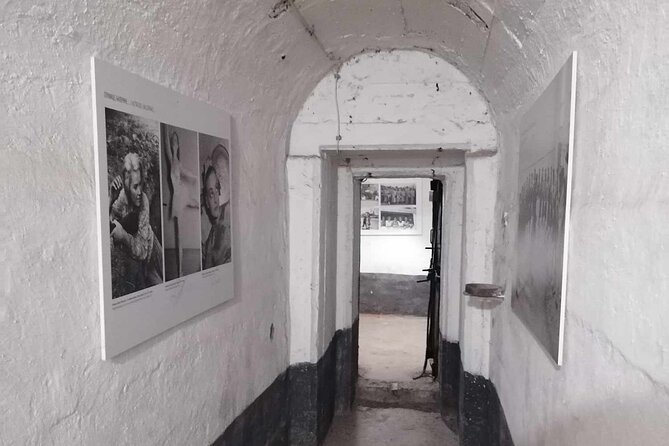
The bunker shifts the story forward by centuries. After old fortress construction and underground water access, you move into the mid-20th century and the tense period of the Cold War.
The bunker was built for military use but was never used for its original purpose. That fact gives the stop a slightly eerie quality. You are seeing a prepared space shaped by fear and planning, not a place marked by a famous battle or a dramatic event.
I like this contrast. The tour does not treat Belgrade’s underground spaces as one single historical category. The Roman Well belongs to fortress engineering and legend. The bunker belongs to modern military thinking. Put together, they show how the same city kept reworking its underground spaces as threats changed.
The bunker may appeal most to anyone interested in 20th-century European history, military planning, or the practical side of the Cold War. If your main interest is grand architecture, this part may feel plain. Its value comes from what it represents and from the guide’s explanation.
Guide quality is especially important here. Michael has been praised for bringing a strong sense of enthusiasm and detail to the fortress portion. Stefan has also been described as giving a clear general introduction to Belgrade. Milan has been noted for explaining the underground sights well, though less information was given during the walks between them.
You may not get the same guide on every departure, so it is best to think of those names as examples rather than a promise. English is the working language, but one participant found the English level of a guide too basic to follow comfortably. If historical explanation is the main reason you are booking, that is worth keeping in mind.
Barutana, the old Austrian gunpowder storehouse
The second stop is Barutana, an Austrian gunpowder storehouse built in the 16th century. It is described as a man-made cave, which gives the stop a different feel from the fortress rooms.
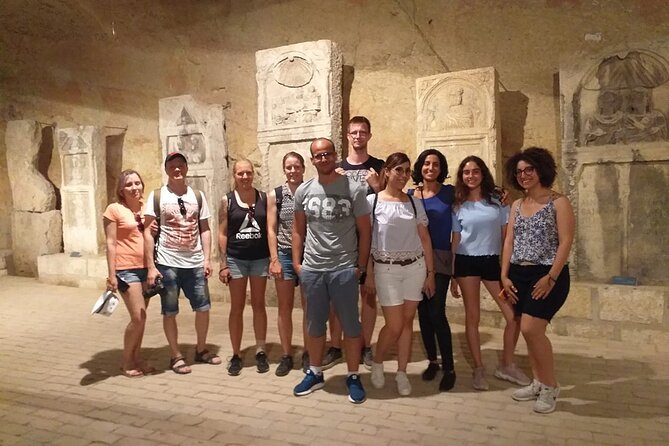
Barutana also includes a display room called the Lapidarium. Here you see Byzantine and Roman sarcophagi, gravestones, and statues. This is an important part of the tour because the stones provide physical evidence of earlier eras, not just stories about them.
For me, the Lapidarium is likely to be most rewarding if you enjoy carved stone, funerary objects, and the way older materials survive inside later military sites. The setting helps, too. A gunpowder storehouse repurposed as a place to display ancient stonework is a reminder that Belgrade has repeatedly built over, reused, and adapted its past.
The stop lasts about 30 minutes, and admission is included. That is enough time for an introduction and a look at the displayed pieces, but do not expect a full museum visit with extensive time at every object.
The word cave can create the wrong expectation. This is a constructed underground military space, not a natural cave excursion. You are visiting a historical structure with artifacts, not heading out for a long outdoor adventure.
The same practical warning applies here as at the fortress. Ground conditions can be uneven, and the route may not suit everyone. The tour description says most people can participate, but the individual experience depends on your balance, stamina, and comfort with stairs.
Same city, a different kind of afternoon:
- Northern Serbia: Sremski Karlovci and Novi Sad Full-Day Tour from Belgrade
★ 5.0 · 425 reviews - Day Trip from Belgrade: Gems of Eastern Serbia
★ 5.0 · 424 reviews - Belgrade Nightlife Bar Pub Club Crawl with Drinks
★ 5.0 · 277 reviews - Taxi to/from Belgrade Airport to/from Belgrade City Center
★ 5.0 · 241 reviews
Karađorđeva’s food caverns and wine cellar
The final stop moves away from military history and toward everyday city life. At Karađorđeva, you visit caverns where food was stored and a wine cellar dating from the 19th century.
This part helps the tour feel more complete. Underground spaces were not used only for defense or burial stones. They also served ordinary needs, such as keeping food in suitable conditions and storing wine.
The stop lasts around 45 minutes and ends at the winery Vinarija at Karađorđeva 31, close to Branko’s Bridge. You receive a free glass of wine, and there is no separate admission charge for this portion.
The wine is a modest but useful finish. It gives you time to pause after the darker, more enclosed sections and makes the end of the tour feel social. It is not presented as a full tasting program, so book this for the cellar and the atmosphere, with the wine as an included extra.
This location is also practical if you want to continue exploring central Belgrade afterward. The tour ends at the winery rather than returning to Republic Square, so check the route before you book and plan from the final address.
What the guide adds to the experience
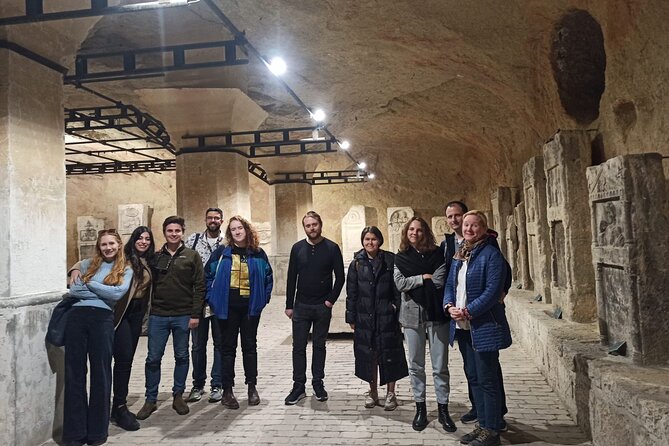
This tour depends more on guiding than many simple walking routes. The underground spaces are interesting, but they need explanation. A good guide connects the Roman Well to the fortress, the bunker to the Cold War, Barutana to older stonework, and the cellar to the city’s food and wine traditions.
Michael has received especially strong praise for his historical storytelling and enthusiasm at the fortress. Stefan has been described as giving a useful general sense of Belgrade while explaining the sights. Milan has been praised for his explanations inside the underground locations.
At the same time, communication has not been perfect for every departure. One person understood less than half of a guide’s explanation because of basic English. Another found that the guide was excellent at the sights but gave little information during the walks between them.
That means you should book this tour for access and structure first, and for a polished lecture second. The group is capped at 20 people, but there is no mention of an audio system. One participant had trouble hearing the guide, particularly when the group was together.
If you are very interested in the history, stay close to the guide and ask questions when there is a pause. That will give you the best chance of catching details in the underground rooms, where sound may not carry well.
Physical demands, shoes, and group comfort
The most important practical issue is the route itself. The tour includes steep, narrow stairs and uneven ground. Some sections may have no handrails.
You should wear shoes with a firm sole and good grip. Avoid treating this as a casual stroll in sandals or smooth-soled city shoes. The total duration is only about two and a half hours, but the underground conditions can make parts of it tiring.
The tour is not described as wheelchair accessible. Most people can participate, but that general statement should not override the specific warning about stairs and uneven surfaces. If you need regular seating, handrails, or easy access, contact the provider before booking.
A maximum of 20 people keeps the group from becoming huge, though it is still large enough that hearing the guide may take effort. Stand near the front when possible. If you have hearing difficulty, ask about the group setup before the tour begins.
Public transportation is nearby, and the starting point is easy to identify at Republic Square, Trg republike 3. The end point is different, at Karađorđeva 31, so allow for that when planning your next stop.
Who will get the most from this Belgrade tour
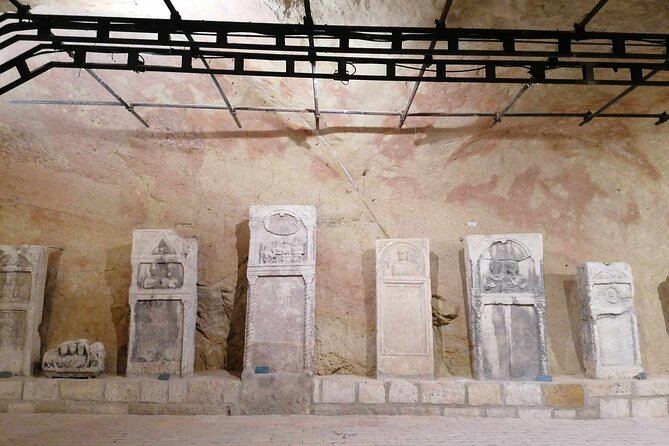
I would recommend this experience to you if you like unusual sites, military history, old stonework, and the practical details of how cities use underground spaces.
It is also a good pick if you have already seen Belgrade’s main streets and want something less conventional. The route adds variety to a city visit without taking a full day.
You are likely to enjoy it most if you can handle stairs and do not need every stop to be heavily polished or museum-like. The best moments come from the sense of place: descending into the Roman Well, standing inside an unused Cold War bunker, viewing ancient stones in Barutana, and ending with wine in an old cellar.
I would hesitate if you want an easy walk, a fully accessible route, or a highly formal English-language presentation. The physical demands are real, and the guide’s English and delivery may vary.
The tour has a 4.4 rating from 14 reviews, which suggests a generally positive but not flawless experience. That fits the details: strong guides can make the history memorable, while difficult stairs or unclear explanations can affect the day.
Booking, price, and cancellation
At $24.06 per person, the tour offers solid value when you count the included entrance fees, professional guide, and free glass of wine. The price is especially reasonable if you would otherwise struggle to find or understand the Roman Well, bunker, Barutana, and cellar independently.
It is usually booked about 23 days ahead, so reserve early if your Belgrade dates are fixed. Confirmation arrives at booking, and mobile tickets are accepted. Group discounts may lower the cost for larger parties.
Free cancellation is available if you cancel at least 24 hours before the local start time. Cancellations or changes made less than 24 hours ahead are not refunded or accepted.
Should you book Underground Secrets of Belgrade?
Book it if you want a focused look at Belgrade below the surface and you are comfortable with steep stairs, uneven ground, and a guide-led group walk. The Roman Well, Barutana’s stone displays, and the old wine cellar give the tour a distinctive shape, while the Cold War bunker adds a modern change of pace.
Skip it if mobility is a serious concern or if you need guaranteed, highly polished English commentary. For the right person, this is a good-value way to connect several unusual places in one outing. Just wear proper shoes, stay close to the guide, and treat the wine as a pleasant ending rather than the main event.
FAQ
Where does the tour begin?
The tour begins at Republic Square, Trg republike 3, in Belgrade, Serbia.
Where does the tour end?
It ends at Vinarija, Karađorđeva 31, near Branko’s Bridge.
How long does the tour last?
The tour lasts approximately 2 hours and 30 minutes.
What language is the tour offered in?
The tour is offered in English.
What is included in the price?
Entrance fees, a professional tour guide, and a free glass of wine are included. Personal expenses are not included.
How large is the group?
The maximum group size is 20 people.
Can I cancel for a full refund?
Yes. You can cancel for a full refund up to 24 hours before the experience start time. Cancellations made less than 24 hours before the start time are not refunded.
Just added in Belgrade
- Belgrade Layover Private tour + E-Scooter Sighteeing★ 5.0 · 6 reviews
- Belgrade Insight Private Tour – For Those Who Seek Answers★ 5.0 · 6 reviews
- Belgrade Private Driving & Walking Tour★ 5.0 · 4 reviews
- Belgrade Fashion and Design Tour – Discover Local Designers★ 5.0 · 4 reviews
- 4-Hour Belgrade Private Grand City Walking Tour★ 5.0 · 8 reviews
- Belgrade Local Craft Beer Tasting Tour★ 5.0 · 8 reviews
- Belgrade Chuggalong – Pub Crawl★ 4.0 · 8 reviews
- Ada Lake Tour★ 5.0 · 7 reviews
Communist & Yugoslav History Tours, compared.
Belgrade Underground Tour w/ Sparkling Wine Along the River
Read our review →

Browse the lists this tour appears in