
Reviewed · WINE TOURS
Belgrade Underground Tour w/ Sparkling Wine Along the River
Belgrade keeps some of its best stories below street level. This 2.5-hour tour takes you into the fortress’s Austrian-era well, gunpowder warehouse, and Cold War bunker, then sends you down to the Sava River for a drink. It is a good way to see the capital’s past in layers, from Roman remains to President Tito’s political maneuvering.
I like the range of time periods and the guides’ personal way of explaining them. Guides such as Bojan, Darko, Kristina, and Novica are praised for clear English, humor, and an easy willingness to answer questions. I also like the cool underground rooms on a hot day. The main drawback is simple: this is not an entirely underground tour, and the walking includes quite a few stairs.
Key points to know before booking
- Three very different underground sites: See the Austrian well, an 18th-century gunpowder warehouse, and a Cold War military bunker.
- History with a human voice: Guides including Bojan, Darko, Kristina, and Novica add stories, political context, and answers to questions.
- Not all underground: You walk around Belgrade Fortress between the enclosed sites and enjoy views toward the Sava and Danube.
- A drink by the river: The tour ends at Beton Hala with a glass of wine, though the setting is a modern bar or restaurant rather than an old Serbian tavern.
- Good value at $35.09: Entrance fees, a professional English-speaking guide, and one alcoholic drink are included.
- Prepare for stairs: Most people can take part, but the Roman well and other underground areas are not a good fit for anyone who has difficulty with steps.
Belgrade Fortress, seen from below
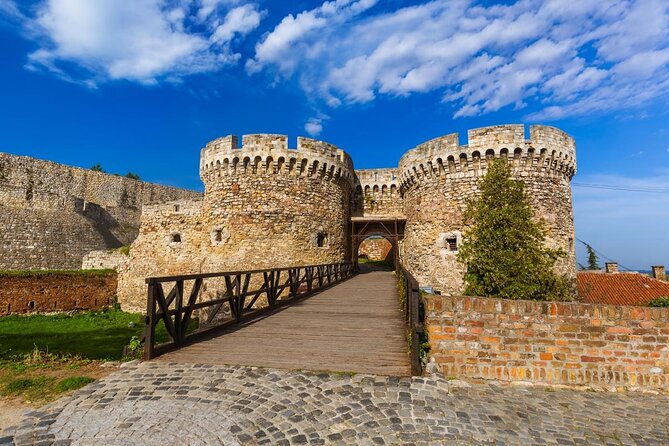
Start at Osnovna škola Kralj Petar I on Kralja Petra 7. From there, the guide leads you toward Belgrade Fortress and its less obvious rooms. The fortress itself is an open-air landmark, so expect a mix of outdoor walking and enclosed stops rather than two and a half hours in tunnels.
That distinction matters. The tour is best understood as a fortress history walk with access to several underground sites. If you want a long network of tunnels or a full caving experience, this may feel modest. If you want to connect the fortress walls to the people and powers that used them, the format works well.
The setting gives the guide plenty to work with. Belgrade Fortress has Roman, Austrian, Ottoman, Yugoslav, and modern associations, and the route uses three underground spaces to show how the site changed over time. The guide’s job is not only to point out doors and walls, but to explain why each space was built and what it tells you about Serbia.
The group can be as large as 40 people, though smaller groups are easier for hearing the guide in enclosed rooms. The shared tour requires at least four participants. If that minimum is not reached, the operator offers another date or a cancellation without a fee.
More of the recent past in Belgrade:
- Belgrade War Island Kayak Tour
★ 5.0 · 101 reviews - Red Belgrade Communist Tour
★ 5.0 · 78 reviews - Great War Island Kayak Adventure
★ 5.0 · 20 reviews
The so-called Roman Well and its Hitchcock connection
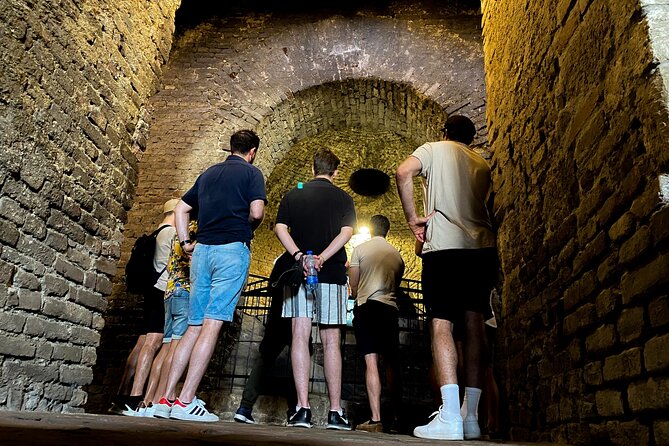
The first major stop is the Roman Well beneath the fortress. The name can confuse you: the structure described for this tour was built in the 18th century during the Austrian period, not during ancient Roman rule. The site is linked to several mysteries, and Alfred Hitchcock reportedly considered it his favorite spot in Belgrade.
That unusual detail gives the stop a little drama, but the real value is the physical space itself. You see how a fortified city stored and protected water, and how later generations reused or reinterpreted older parts of the site. The guide fills in the political and military background as you move through the area.
The Roman Well is also part of the tour’s broader look at the fortress as a place with several layers beneath it. Roman relics and a Roman Hall are among the archaeological features associated with the fortress. You are not simply looking at a single period called Roman Belgrade. You are seeing later construction placed over, beside, and around earlier remains.
Take your time here if you enjoy atmosphere and old masonry. If you need a highly active attraction with many objects to see, the well may feel quiet and restrained. It is a place for a story, a sense of scale, and a careful look at the structure.
The Austrian gunpowder warehouse
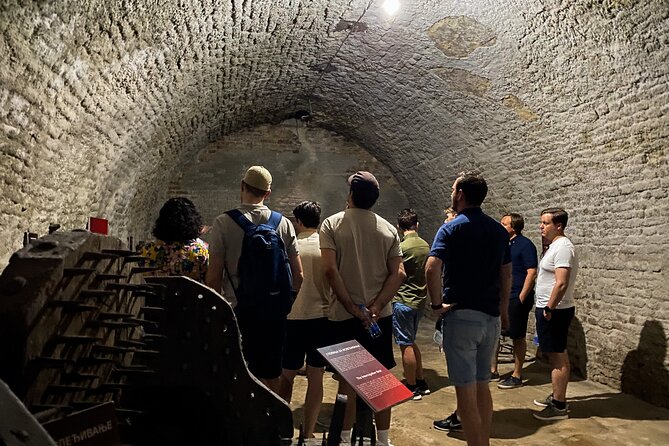
Next comes the gunpowder warehouse, built by the Austrians as part of the fortress defenses during their wars against the Ottoman Empire. This is one of the tour’s most memorable stops because the walls are part of the exhibit. You can touch the stone and understand the heavy, practical construction needed to store dangerous material inside a working fortress.
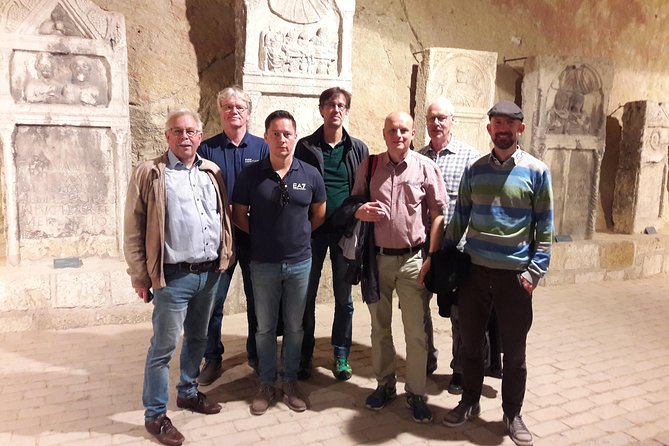
The warehouse also serves as an exhibition space. Inside, you see sarcophaguses and altars collected from archaeological sites around Serbia. That makes the stop more than a military room. It links the fortress to the country’s wider archaeological record and gives you objects to examine while the guide explains their setting.
I like this combination of architecture and artifacts. A museum can show you an object behind glass, while a fortress warehouse lets you consider why the room was built and how it was used. The cool interior can also be welcome during Belgrade’s hot summer weather.
Still, keep your expectations in check. This is one chamber, not an enormous underground complex. A short tour of three enclosed areas suits someone who wants a focused introduction. It may disappoint you if you expect hours of tunnels, large excavated ruins, or a long series of chambers.
Tito, the Cold War, and the army bunker
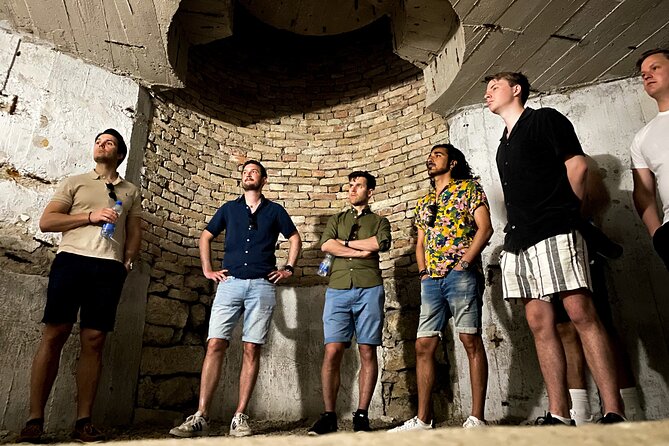
The third underground stop is a military bunker from the Cold War period, built after the Second World War during President Tito’s rule. Here the subject shifts from empires and fortifications to Yugoslavia’s place between major powers.
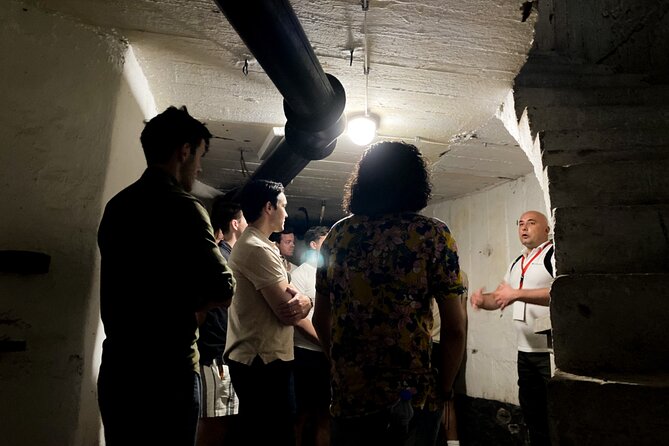
The guide explains some of Tito’s political maneuvering and the pressure created by relations between large countries. This gives the bunker a purpose beyond its concrete walls. You get a glimpse of the security thinking of the period and the anxieties that shaped military planning.
This section tends to work best when your guide tells the story clearly and keeps the political background in proportion. Bojan, Darko, Novica, and other guides have been praised for speaking good English, adding humor, and presenting complicated subjects in a concise way. Guide assignments vary, so you cannot book a particular personality with certainty, but the experience depends heavily on who leads your group.
The bunker is also a useful contrast with the older parts of the fortress. In one tour, you move from Austrian defenses to archaeological remains and then to a modern military shelter. That change in tone is the central idea of the experience: Belgrade’s past is not one single story.
More wine to taste around Belgrade:
- Private Novi Sad, Titanic wine tasting and Farmer’s House
★ 4.5 · 30 reviews - Private Wine Tour in Royal Region
★ 5.0 · 17 reviews - Novi Sad and Sremski Karlovci private tour with wine tasting
★ 5.0 · 9 reviews - From Belgrade: Danube Day Trip with Wine and Brandy Tasting
★ 5.0 · 3 reviews
Views, stairs, and the parts that are not underground
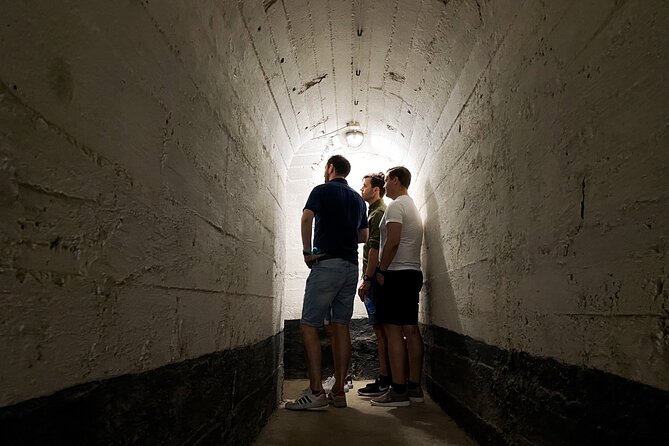
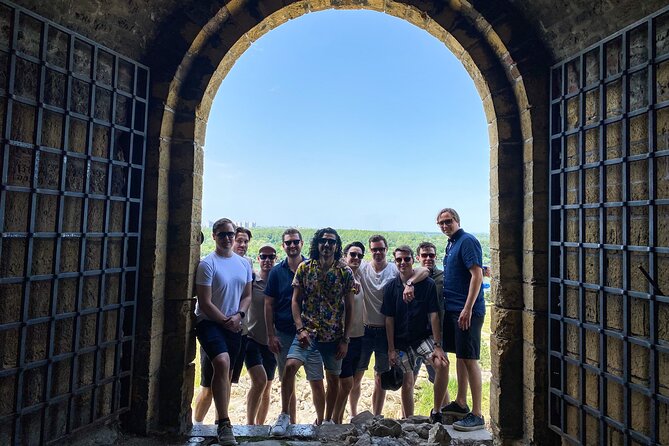
Between the enclosed sites, you walk through the fortress grounds. The route includes views toward the Sava and Danube, and the outdoor sections help you understand the fortress’s position above the meeting of the rivers.
This also explains why the tour can appeal to people who have already seen the main fortress paths. The underground entrances and rooms are easy to miss when you explore alone. At the same time, if you already spent a full day walking around the fortress, some of the above-ground route may feel familiar.
Stairs are the practical issue to take seriously. Most people can participate, but the route is not suitable for every level of mobility. One person using crutches could only visit the Roman Well, so ask about current conditions if steps are a concern. The supplied information says most people can take part, but it does not promise step-free access.
Wear comfortable shoes and leave room in your schedule for a steady pace. The tour lasts about two hours and 30 minutes, though the listed stop itself is described as two hours. Since you also walk outdoors and finish at a separate location, you should not plan a tight connection immediately afterward.
Finishing at Beton Hala with a glass of wine
The tour ends at Beton Hala, Karađorđeva 2, along the Sava. A glass of wine is included, and it gives you a chance to sit down after the fortress walk. Some drinks may be available if sparkling wine is not your preference, but the included benefit is one alcoholic beverage.
The setting is a modern riverfront bar or restaurant. That can be a pleasant ending, especially if you want a comfortable place to continue talking with the guide and ask for suggestions about Belgrade. It is not an old tavern, though, and you should not book this expecting a traditional Serbian wine cellar or a historic drinking den.
The tour describes the drink as local wine. One account found that the wine offered was not Serbian, so if the origin of the wine matters to you, ask at the venue rather than assuming the glass will showcase a Serbian label. The drink is a small extra, not the main reason to book.
The end point is separate from the start, which is useful if you want to continue along the river afterward. Transportation between the attractions is not included, but the walking route connects the main parts of the experience. The start is near public transportation, and the finish is in a well-known riverfront area.
Is $35.09 a fair price?
At $35.09 per person, the price is reasonable for a guided history walk that includes entrance fees and a drink. You are paying for access to places you might not discover on your own, plus the guide’s explanation of how the Roman, Austrian, Ottoman, Yugoslav, and Cold War periods fit together.
The value is strongest if you are interested in context. A casual look at the fortress may show you walls, views, and open courtyards. This tour adds locked or less obvious interior spaces and gives each one a reason to matter.
The value is weaker if you want a large attraction with many rooms or a long underground route. The tour visits three main underground areas, not an entire subterranean city. One critical opinion found the sites underwhelming, and that reaction is possible if your expectations lean toward dramatic tunnels or elaborate ruins.
For a small group, the price also buys time for questions. Groups can reach 40 people, and large groups may make it harder to hear in enclosed areas. The most positive accounts consistently praise the guides’ delivery, English, humor, and care in hot weather. Those qualities can make a compact route feel much fuller.
Who will enjoy this Belgrade tour?
I would choose this experience for a first visit to Belgrade if you want a quick introduction to the fortress and the city’s political past. It is also useful near the start of a longer stay because the guide can give you a framework for later visits to museums and historic sites.
It suits you especially well if you like:
- Fortifications and military history
- Cold War politics and Yugoslav history
- Archaeological remains in their original setting
- Small, unusual places that are easy to miss alone
- Walking tours led by a guide who can answer questions
- A riverfront drink after sightseeing
You may want another activity if you dislike stairs, prefer a fully underground route, or have already spent extensive time at the fortress and want something entirely new. The experience is also less suited to someone seeking a food tour, a Serbian wine tasting, or a long archaeological excavation visit.
The tour is offered in English. Since guide quality is central to the experience, the names most often praised include Bojan, Darko, Kristina, Novica, and Vladica, but the assigned guide depends on the date. Confirmation arrives at booking, and free cancellation is available up to 24 hours before the start time. Poor weather or failure to reach the minimum group size can also lead to a different date or a full refund.
Should you book it?
Book this tour if you want a compact, story-led look at Belgrade Fortress rather than a major underground attraction. The Austrian gunpowder warehouse, Cold War bunker, and unusual well create a good three-part route, while the guides add the context that makes the rooms worthwhile.
Skip it if you expect every minute to be underground or want a deeply traditional wine experience at the end. For most visitors who enjoy history, walking, and a few places they would not find alone, $35.09 is a fair price, particularly when the guide is as engaging as Bojan, Darko, Kristina, or Novica.
FAQ
How long does the Belgrade Underground Tour last?
The experience lasts approximately 2 hours and 30 minutes. The itinerary describes the main stop as lasting about 2 hours, followed by the riverfront ending.
What sites does the tour visit?
You visit the Roman Well, an Austrian-built gunpowder warehouse, and a Cold War military bunker beneath or within Belgrade Fortress. The route also includes walking around the fortress grounds.
Is the entire tour underground?
No. The tour combines underground or enclosed sites with outdoor walking around Belgrade Fortress and views toward the Sava and Danube.
Is a guide included?
Yes. A professional English-speaking guide is included. Guide names associated with the experience include Bojan, Darko, Kristina, Novica, and Vladica, but the guide varies by departure.
Is wine included?
Yes. One glass of local wine or sparkling wine is included as an alcoholic beverage at the end of the tour. The tour finishes at a riverfront bar or restaurant near Beton Hala.
Where does the tour start?
The meeting point is Osnovna škola Kralj Petar I, Kralja Petra 7, Belgrade, Serbia.
Where does the tour finish?
The tour ends at Beton Hala, Karađorđeva 2, Belgrade 11080, beside the Sava River.
Are entrance fees included?
Yes. Entrance fees for the included sites are covered in the tour price.
Is the tour suitable for people with limited mobility?
Most people can participate, but the tour includes quite a few stairs. Someone using crutches was only able to visit the Roman Well, so step-free access should not be assumed.
What happens if I need to cancel?
You can cancel for a full refund up to 24 hours before the local start time. Changes or cancellations made less than 24 hours before departure are not accepted for a refund.
Just added in Belgrade
- Belgrade Layover Private tour + E-Scooter Sighteeing★ 5.0 · 6 reviews
- Belgrade Insight Private Tour – For Those Who Seek Answers★ 5.0 · 6 reviews
- Belgrade Private Driving & Walking Tour★ 5.0 · 4 reviews
- Belgrade Fashion and Design Tour – Discover Local Designers★ 5.0 · 4 reviews
- 4-Hour Belgrade Private Grand City Walking Tour★ 5.0 · 8 reviews
- Belgrade Local Craft Beer Tasting Tour★ 5.0 · 8 reviews
- Belgrade Chuggalong – Pub Crawl★ 4.0 · 8 reviews
- Ada Lake Tour★ 5.0 · 7 reviews
Wine Tours, compared.

Private Novi Sad, Titanic wine tasting and Farmer’s House
Read our review →
Novi Sad and Sremski Karlovci private tour with wine tasting
Read our review →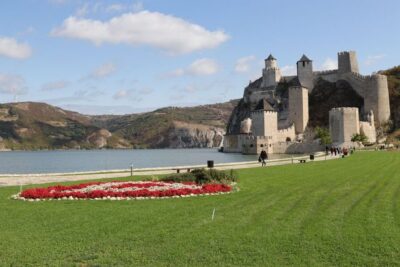
Browse the lists this tour appears in