
Reviewed · TOURS IN BELGRADE
Belgrade: The White Emigration in Serbia in the Wake of the Russian Revolution
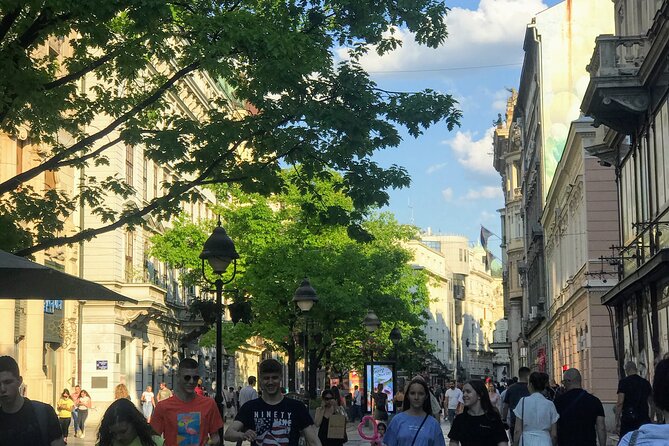
Belgrade carries an unusual Russian story. After the 1917 Revolution, up to 100,000 Russian émigrés came to the Kingdom of Serbs, Croats and Slovenes, bringing soldiers, architects, scientists, artists, and families. This three-hour private walk follows their mark through churches, government buildings, royal sites, cafés, and theatres.
I like the tour’s two-part appeal: history with real city walking, and a subject that reaches beyond monuments into questions of exile, work, politics, and survival. Guide Julja is praised for knowing both Serbian history and the finer points of the subject. The main drawback is the price, $173.64 per person, which is a serious outlay for a walking tour and does not include snacks or drinks.
Key points to know before you book
- A Russian exile story told through Belgrade streets: The tour explains why so many Russians settled here and how their arrival changed the capital.
- Baron Wrangel’s burial place: Holy Trinity Church provides a direct link to the White Russian military world.
- Architecture is part of the evidence: You’ll look for Russian influence around Parliament, the post office, ministries, and the General Staff.
- Royal ties add political context: The route includes the Royal Palace area and a monument to Nicholas II.
- Culture is not an afterthought: Russian performers and designers shaped Belgrade’s ballet, theatre, music, and public life.
- A private format with a specialist guide: Only your group takes part, and Julja’s detailed, emotional style suits people who want more than dates and names.
Why the White emigration matters in Belgrade
The Russian Revolution created one of Europe’s great movements of exile. Between one and two million people left Russia over roughly three years, and as many as 100,000 reached the Kingdom of Serbs, Croats and Slovenes.
That number mattered. The country had a small population, and the newcomers included a trained army, senior officials, scholars, engineers, artists, and skilled workers. They needed homes and jobs. Serbia and its new kingdom needed people who could teach, build, design, perform, and serve.
This walk asks a useful question: was the Russian arrival good or bad for Belgrade? You will not get a simple answer. The tour looks at the benefits, the political risks, and the practical problem of hosting a trained and partly armed army from another country.
That last subject gives the experience some unusual tension. How do you keep an army in exile from overthrowing a government, occupying part of a country, or simply running out of food? The story is not only about monuments. It is also about choices made by a young state under pressure.
Other tours people book in Belgrade:
- Northern Serbia: Sremski Karlovci and Novi Sad Full-Day Tour from Belgrade
★ 5.0 · 425 reviews - Day Trip from Belgrade: Gems of Eastern Serbia
★ 5.0 · 424 reviews - Belgrade Nightlife Bar Pub Club Crawl with Drinks
★ 5.0 · 277 reviews
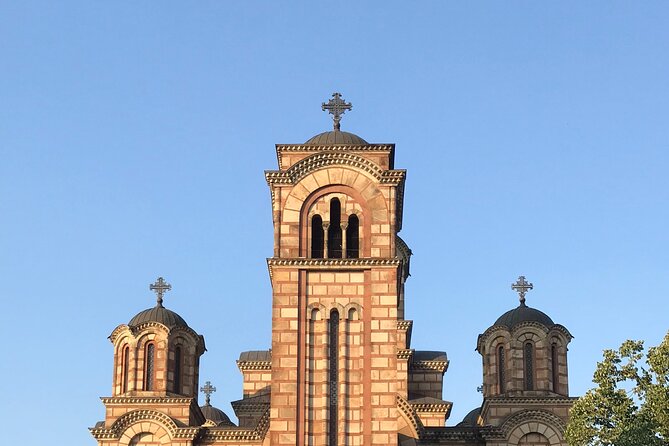
Starting at St. Mark Orthodox Church
The meeting point is St. Mark Orthodox Church on Bulevar kralja Aleksandra 17. From there, the walk moves through central Belgrade, with the first major stop at Holy Trinity Church.
You should expect a city walk rather than a series of long indoor visits. The listed stops are mainly places to observe, discuss, and connect. Admission is included where stated, but the only listed inclusion is the guide, so plan to pay separately for coffee, cake, and any other food or drink.
The private format matters here. On a subject with military, royal, religious, and political details, you can ask the questions that interest you instead of following a fixed script for a large group. Julja’s reported strength is answering questions and explaining the fine points of Serbian history, so this setup should suit curious visitors who want conversation.
Holy Trinity Church and Baron Wrangel
Holy Trinity Church is the best place to begin because it brings the White Russian story down to one person and one burial site. Baron Pyotr Wrangel, a major White Army commander, is buried here.
Wrangel is closely linked with the anti-Bolshevik military forces that fought after the Revolution. Seeing his burial place gives the tour a human and political focus before it turns toward buildings and institutions.
The stop lasts about 30 minutes and admission is free. I would pay close attention here if you want to understand the military side of the story. The tour later asks how an army in exile could be hosted safely, and Wrangel’s presence gives that question a face.
This is also a religious site, so the tone may feel more reflective than the architectural stops that follow. The tour is not just about military defeat. It is about what happens to leaders and soldiers when the country they served no longer exists in its former form.
Russian architects around Parliament and the ministries
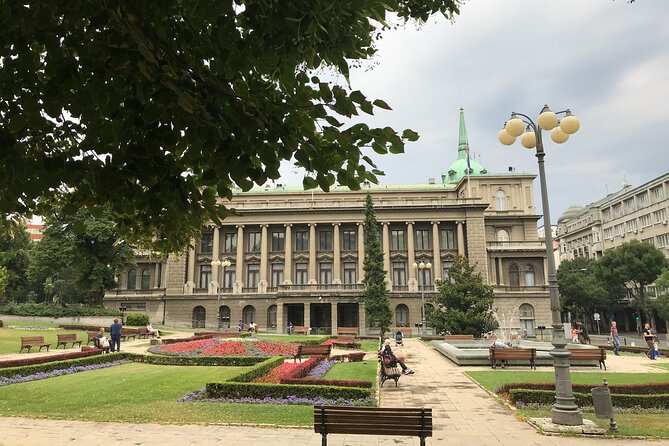
The next section passes through a picturesque former royal park and looks for Russian influence in Belgrade’s architecture. You will see the Serbian Parliament, the post office, the General Staff, and ministry buildings.
The key point is not simply that Russian architects worked in Belgrade. The tour also asks why that contribution is not always acknowledged in a straightforward way. Public buildings often have layered authorship, changing plans, political symbolism, and national narratives attached to them.
This makes the walk useful even if architecture is not your main interest. You learn to look for the Russian presence in the shape of the city rather than waiting for a plaque to explain it.
Allow about 30 minutes for this part. The buildings are viewed from the route, so you should not expect a full architectural tour of every interior. Instead, Julja connects what you see to the arrival of émigré professionals and the effort to rebuild and modernize the capital.
Same city, a different kind of afternoon:
- Taxi to/from Belgrade Airport to/from Belgrade City Center
★ 5.0 · 241 reviews - Belgrade Big Tour: Top Attractions and Belgrade Neighborhoods
★ 5.0 · 232 reviews - Along the Danube: Golubac Fortress & Iron Gate Gorge day trip from Belgrade
★ 4.5 · 185 reviews - From Belgrade: Golubac Fortress & Iron Gate Danube Gorge
★ 4.8 · 185 reviews
The Royal Palace area and Nicholas II
The route then passes the Royal Palaces and a monument to Nicholas II. This is where the relationship between the Serbian and Russian dynasties comes into focus.
Royal connections help explain why Russian refugees found a welcome in this part of Europe. The tour uses the site to discuss personal and dynastic ties, not just official policy. That makes the refugee story more complicated than a simple tale of strangers arriving in a new country.
The stop lasts about 30 minutes. You will be outside and looking at the palace area and monument rather than taking a full palace tour. If you enjoy European royal history, this section should add useful context. If you prefer social history, listen for how royal sympathy connected to the practical needs of an overwhelmed state.
Hotel Moskva, old crafts, and two Belgrade cakes
Hotel Moskva changes the pace. The route follows a street once filled with craft workshops and now associated with designers, then pauses in the hotel’s luxurious interiors.
The plan includes coffee and a taste of the Moskva and Aurora cakes, made according to old recipes. This is a small but effective part of the experience. Food can make a historical subject feel immediate, and the café stop gives you a chance to watch Belgrade life while discussing the Russian presence in the city.
The listed time is about 15 minutes, so do not expect a long café session. Alcoholic drinks and snacks are not included, and only a guide is included in the tour price. Bring extra money for anything you order.
Hotel Moskva also adds a social angle. The tour looks at the city’s beau monde and the places associated with public life. You are not only following refugees through official buildings. You are also seeing how émigrés fitted into, or contributed to, the city’s cultural and social world.
The National Theatre and Russian stage talent
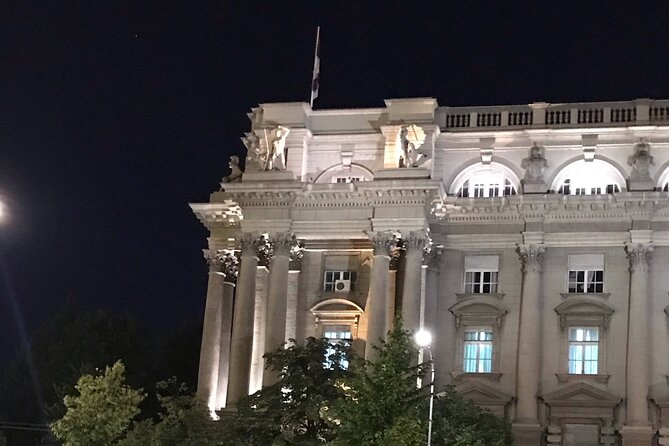
At the National Theatre, the focus shifts to performance. Russian ballerinas appeared here, while scenic designers, choreographers, and directors helped shape theatrical life.
This section is valuable because it shows that exile did not mean a complete break from professional identity. A dancer could still perform. A director could still direct. A designer could still help create a stage world, even far from home.
The tour also covers street songs and the people who deserve kind remembrance when you hear a Serbian choir. That detail hints at a broader cultural exchange, though the supplied schedule does not list the names of those figures. Julja can explain the connections as you walk.
The stop takes about 15 minutes. It is brief, but it widens the subject beyond politics and military history. If you are choosing this tour for architecture alone, the theatre may be a pleasant surprise. If you enjoy music and performance, give this stop your full attention.
Belgrade University and the Academy of Sciences
The walk continues to Belgrade University and the Serbian Academy of Science and Art. Here, the subject becomes intellectual and professional.
Russian émigré scientists faced a difficult question: how could they continue their work in a new country, in a new academic system, and often in a language that was not their first? The tour examines their fate and their contribution to institutions that still matter in Serbian public life.
This is another 30-minute section, and it helps balance the military and royal material earlier in the walk. The Russian arrival was not only about generals and aristocrats. It also involved researchers, teachers, and specialists whose skills could benefit a country rebuilding after war.
You may find this part especially useful if you want to understand immigration as a working reality. People had to find positions, build professional networks, and make themselves useful while carrying the loss of a homeland.
Nemanjina and Gavrilo Princip Square
The final section includes Gavrilo Princip Square and a discussion of the First World War and the assassination that helped shape world history. It also returns to places Russian émigrés visited a century ago, including locations that remain open today.
This gives the route a wide historical frame. The Russian Revolution did not happen in isolation, and the White emigration cannot be separated from the First World War, the collapse of empires, and the political violence that reshaped Europe.
The listed time is about 30 minutes. Because the tour ends back at the meeting point, the full walk forms a loop rather than leaving you on the opposite side of the city.
This final stretch may be the most demanding intellectually. The tour moves from local streets to major European events, then back to ordinary places where émigrés lived, met, worked, and spent time. That mix is one of the experience’s best features.
How much value do you get for $173.64?
At $173.64 per person, this is not a budget walking tour. The value depends heavily on how much you want a private, specialist-led discussion.
You are paying for about three hours with only your own group, a guide, and a carefully connected route through several parts of central Belgrade. You are not paying for a long list of admissions, transport, meals, or drinks. The attractions listed are free to enter, and food is separate.
I would consider the price easier to justify for a small group that shares a strong interest in Russian history, exile, architecture, or Balkan politics. A larger group may benefit from the stated group discounts, though the amount is not given. If you are simply looking for a general introduction to Belgrade, this is probably too specialized and too expensive.
The private format can also make the cost feel more reasonable because you can shape the conversation. A history student, family with a particular interest, or group researching Russian émigré life could get more from this than someone seeking a quick overview of famous sights.
Who should book this Belgrade walk?
I would choose this tour if you enjoy history that is tied to real places. You will see churches, government buildings, royal sites, cafés, a theatre, academic institutions, and a square connected to major European events.
It also suits anyone interested in Russian history outside Russia. The focus is not only on the Revolution itself. You will consider what happened afterward, when displaced people had to build new lives and a host country had to decide how much help, trust, and control were possible.
Guide Julja appears to be a major part of the experience. The strongest praise centers on her command of the topic, her knowledge of Serbian history, her answers to questions, and an emotional storytelling style. That suggests you should come ready to talk, not simply listen to a prepared speech.
I would skip it if you want a relaxed café crawl, a palace interior tour, or a standard first-day orientation to Belgrade. The route has a serious historical subject, several brief stops, and a price that asks for genuine interest.
The tour is private, and confirmation arrives at booking. Most people can participate, but the supplied information does not give a specific accessibility assessment, so ask the provider if walking needs are important for you. Free cancellation is available until 24 hours before the start time. Changes or cancellations inside that window are not accepted for a refund.
Should you book it?
Book this tour if you want to see Belgrade through the story of Russian exile and you value a guide who can handle detailed historical questions. The strongest reasons are the unusual subject, the mix of military, architectural, royal, academic, and cultural stops, and the private format with Julja.
Think twice if $173.64 feels high for a three-hour walk or if you prefer broad sightseeing over focused history. For the right audience, though, this is a thoughtful way to understand how a city absorbs newcomers and how those newcomers leave their mark.
FAQ
Where does the tour begin?
It begins at St. Mark Orthodox Church, Bulevar kralja Aleksandra 17, Belgrade, Serbia.
Where does the tour end?
The activity ends back at the meeting point.
How long does the experience last?
It lasts approximately three hours.
Is this a private tour?
Yes. Only your group participates.
What is included in the price?
A guide is included.
Are food and drinks included?
No. Alcoholic beverages and snacks are not included. The tour includes a coffee stop with Moskva and Aurora cakes, so you should plan to pay separately for those items.
Does the tour visit Holy Trinity Church?
Yes. The route includes Holy Trinity Church, where Baron Wrangel is buried. Admission is free.
Does the tour include the Serbian Parliament and government buildings?
Yes. You will walk through the area and see the Serbian Parliament, post office, General Staff, and ministry buildings while discussing Russian architectural influence.
Who guides the experience?
Guide Julja leads the tour.
Can I cancel for a full refund?
Yes, if you cancel at least 24 hours before the experience start time. Cancellations or changes made less than 24 hours before the start are not accepted for a refund.
Just added in Belgrade
- Private Belgrade Street Art and Adventures Walking Tour★ 5.0 · 4 reviews
- Private Half Day Serbia Tour Novi Sad and Petrovaradin Fortress★ 5.0 · 3 reviews
- Private Wine Tasting by Party in Belgrade★ 5.0 · 3 reviews
- From Belgrade:Uvac Nature Reserve Tour★ 5.0 · 4 reviews
- Urban & Alternative Belgrade tour★ 5.0 · 4 reviews
- Shooting Experience by Party in Belgrade★ 5.0 · 8 reviews
- Transportation from Belgrade or Belgrade Airport to Tara, Mokra Gora or Sagan 8★ 5.0 · 6 reviews
- Belgrade Bike Tour: Be a local in the hood of Belgrade!★ 5.0 · 5 reviews
Tours in Belgrade, compared.
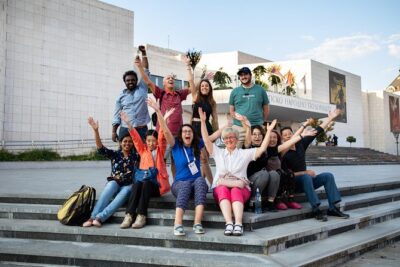
Northern Serbia: Sremski Karlovci and Novi Sad Full-Day Tour from Belgrade
Read our review →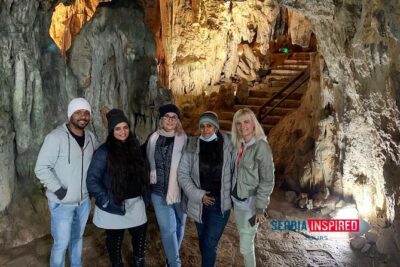
Day Trip from Belgrade: Gems of Eastern Serbia
Read our review →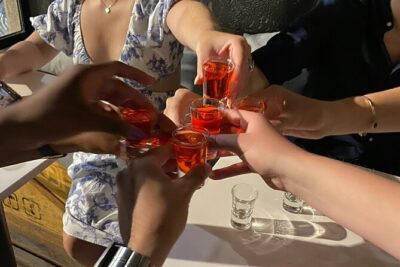
Belgrade Nightlife Bar Pub Club Crawl with Drinks
Read our review →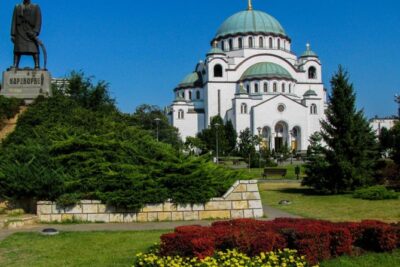
Belgrade Big Tour: Top Attractions and Belgrade Neighborhoods
Read our review →
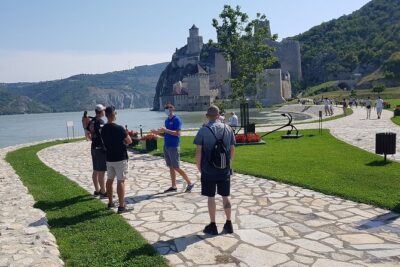
Along the Danube: Golubac Fortress & Iron Gate Gorge day trip from Belgrade
Read our review →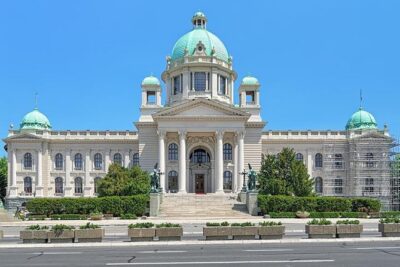
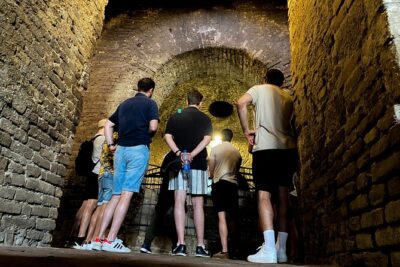
Belgrade Underground Tour w/ Sparkling Wine Along the River
Read our review →Browse the lists this tour appears in