
Reviewed · TOURS IN BELGRADE
NATO Bombing of Belgrade Private Tour
The most striking part of this Belgrade tour is that the evidence remains in the city. The damaged RTS building and Ministry of Defence are not reconstructed museum displays. They are real structures tied to deaths, military decisions, and civilian suffering during the 1999 NATO bombing campaign. You see the sites where the events happened, then hear the Serbian account of what took place.
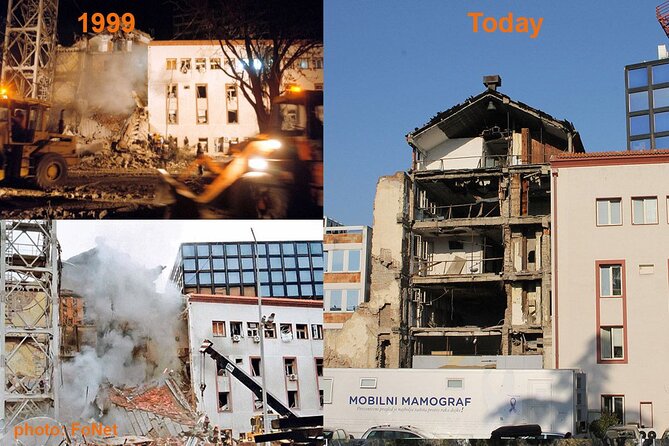
I like the private format, since your group can ask questions and move at a useful pace. I also like the visual storytelling, with photographs used to connect the present-day buildings to the nights of the attacks. The main consideration is that this is serious, sometimes painful history, not a light sightseeing outing. The political story is also contested, so listen closely and ask for context around claims and interpretations.
Key points at a glance
- Five important bombing sites: The route includes RTS, the Ministry of Defence, Ušće, the former Chinese embassy, and the Air Force Command Building.
- Original wartime damage: Several locations still show the physical effects of the 1999 attacks, giving the tour a powerful sense of place.
- Private car and guide: Pickup and drop-off are included, so you avoid piecing together distant sites by taxi or public transport.
- Useful visual material: Photographs help explain how the buildings looked during the bombing and what happened on specific dates.
- Three to four focused hours: Each stop receives about 30 minutes, with driving time between locations.
- Flexible pickup: You can request collection from a hotel, apartment, Airbnb, or Belgrade port.
Why this tour matters in Belgrade
Belgrade’s NATO bombing sites are easy to pass without understanding what you are seeing. A damaged concrete shell may look like an abandoned building, while a modern office tower may conceal a very different wartime past. This tour gives those places names, dates, and human consequences.
The bombing lasted from March to June 1999 during the Kosovo conflict. The experience focuses on the Belgrade locations affected by that campaign, rather than trying to cover the entire conflict in one sitting. That narrower focus works well. You spend time at actual sites instead of sitting through a broad lecture in a room.
The tour also presents the Serbian view of the bombing, including the loss of civilians and the destruction of important buildings. That perspective is central to the experience. You should approach it with respect, but also with the habit of separating established facts from political claims. The best use of your time is to ask when a detail is documented, when it is disputed, and how the Serbian public remembers the event today.
At $145.10 per person, the value depends heavily on the size of your group. For one or two people, it is a substantial half-day expense. For a private group, the cost buys a driver, a guide, door-to-door transport, bottled water, and a route that would be awkward to organize alone. Group discounts are available, though the supplied information does not give the exact reduced price.
A few more things to book in Belgrade
- Private Red Star-Partizan Stadium Tour in Belgrade
★ 5.0 · 72 reviews - Belgrade Private City Tour
★ 5.0 · 41 reviews - Private Transfer
★ 5.0 · 40 reviews
RTS and the monument called Why?
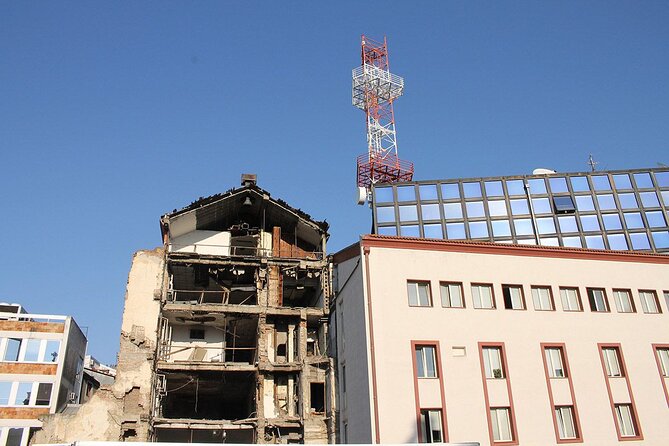
The first stop is the Radio Television of Serbia building, usually called RTS. Outside, the monument Zašto?, meaning Why?, recalls the people killed during the night shift when the building was struck.
Sixteen people, mostly young staff members, died in the attack. The original structure remains unrepaired at the site, which gives the stop an immediate force that a polished memorial or indoor exhibition cannot match. Your guide uses the monument and the surviving building to explain what happened that night.
Expect about 30 minutes here. That is enough time to hear the story, view the site, and consider the difference between a broadcasting building and a military target. The stop raises one of the tour’s central questions: how should a civilian workplace be treated during war when its organization is connected to a government?
This is likely to be the most emotionally difficult stop. If you prefer light sightseeing, it may feel heavy. If you want to understand how the bombing is remembered in Serbia, it provides essential context.
The Ministry of Defence and the image of wartime Belgrade
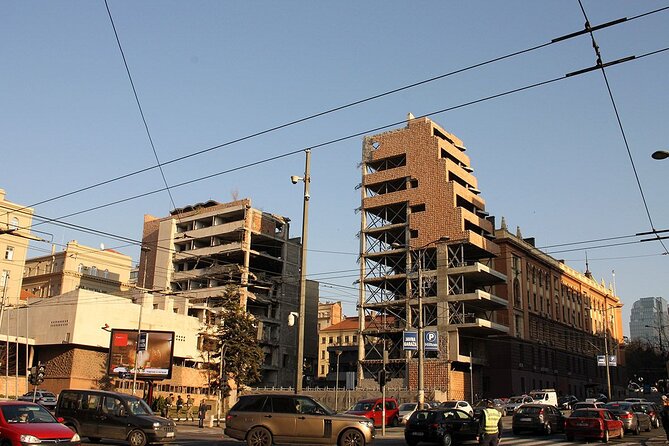
The ruined Ministry of Defence is the most recognizable bombing site on the route. Images of its broken sections appear often in photographs of Belgrade, and seeing it in person gives you a clearer sense of its scale and position in the city.
The building was struck on April 29, 1999, during a night when several military objectives were hit. One person died, and civilian buildings nearby were damaged. Your guide explains what happened at the Ministry and points out the relationship between the military structure and the surrounding city.
Allow about 30 minutes. You will not be entering a museum exhibition here, so the value comes from the guide’s explanation and your ability to study the exterior. The open damage is part of the message. Belgrade did not erase every sign of the campaign, and the ruin remains part of the city’s daily visual life.
For photographs, this is one of the clearest stops. For historical understanding, it also needs careful explanation. A damaged military headquarters can be viewed as a legitimate strategic target by one side and as a symbol of wider civilian danger by another. A good question to ask is how the strike affected nearby nonmilitary buildings and people.
Ušće, from Communist headquarters to business center
The former Central Committee building of the Communist Party of Yugoslavia is now the Ušće business center. It retains the basic skeleton and appearance of the earlier structure, so this stop connects two very different chapters of Belgrade’s political history.
The building was considered resistant to NATO missiles in 1999. The guide explains why it was designed that way and why NATO targeted it despite those defenses. That makes Ušće more than another damaged building. It is a lesson in how architecture, state power, and military planning can overlap.
You will spend around 30 minutes here. The building’s current use also makes the stop especially interesting. Unlike the RTS site or the Ministry of Defence, Ušće is not simply preserved as a ruin. Its continued life as a business center forces you to look at how a city adapts, repairs, and reuses places tied to an earlier political order.
This stop may appeal most to people interested in architecture and twentieth-century politics. It is less visually dramatic than the Ministry of Defence, but the explanation of its construction and wartime purpose adds useful depth to the route.
Same city, a different kind of afternoon:
- Northern Serbia: Sremski Karlovci and Novi Sad Full-Day Tour from Belgrade
★ 5.0 · 425 reviews - Day Trip from Belgrade: Gems of Eastern Serbia
★ 5.0 · 424 reviews - Belgrade Nightlife Bar Pub Club Crawl with Drinks
★ 5.0 · 277 reviews - Taxi to/from Belgrade Airport to/from Belgrade City Center
★ 5.0 · 241 reviews
The former Chinese embassy and a disputed explanation
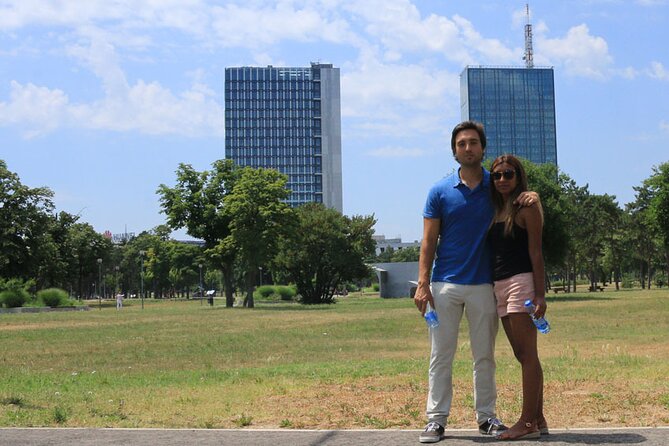
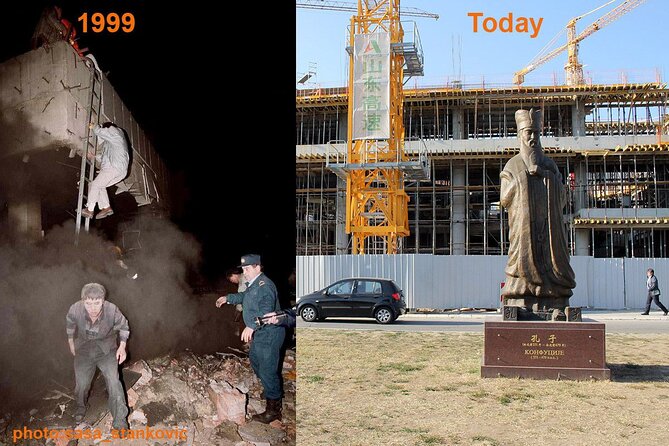
The former Chinese embassy is one of the most controversial stops. Four Chinese citizens died when the building was struck on May 7, 1999. The stated explanation was an intelligence mistake, but other claims about the building’s purpose remain part of the discussion.
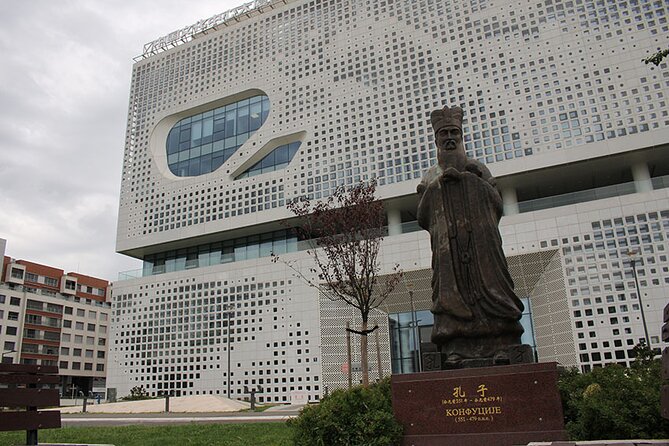
The present Chinese Cultural Center occupies the site, giving it a different feel from the untouched damage at RTS or the Ministry of Defence. Your guide addresses the disputed accounts and explains why the bombing remains sensitive in both Serbia and China.
This is a place where you should listen with care. The event is clear enough: the embassy was bombed and four people died. The reasons behind the strike are more contested. Do not treat every explanation as settled fact. Instead, ask the guide to distinguish the official account, the suspected alternative, and the evidence offered for each.
The half-hour stop is enough for an introduction, but not a full examination of the international politics surrounding the incident. That is not a fault unique to this tour. Five sites in a few hours require selection. The benefit is that you get a clear, manageable route rather than an overloaded lecture.
Air Force Command and the final story
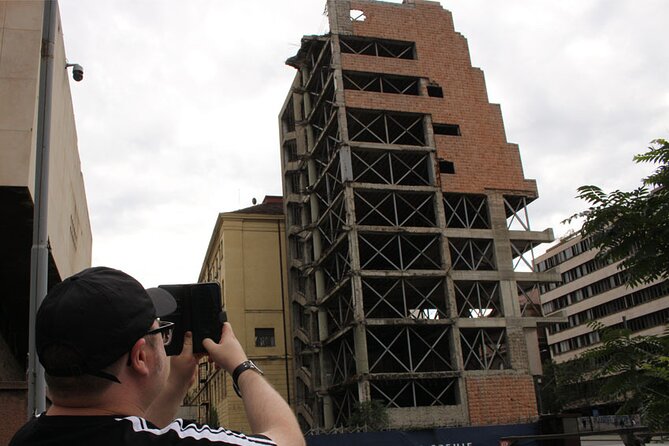
The last stop is the Air Force Command Building, a 1935 structure known for its Yugoslav and Serbian architectural design. Two missiles hit it on April 5, 1999, because it was considered a strategic target.
Here, the guide tells the story of the pilots who entered the fight against NATO aircraft and lost their lives defending the skies over Serbia and Yugoslavia. This gives the final stop a military focus after earlier visits centered more heavily on broadcasters, offices, embassies, and nearby civilian buildings.
The building’s design matters. You are not looking at a plain modern military block, but at an important prewar architectural work that also served a defense role. That mix of beauty, state power, and damage is typical of the tour. Belgrade’s wartime story is written into buildings that had civic, political, cultural, and military purposes at once.
Ending here also gives the experience a different tone. The route does not present only one kind of victim or one kind of loss. It includes media workers, civilians near military targets, foreign diplomatic staff, and military personnel. That broader range is useful, though the interpretation remains rooted in the Serbian experience.
How the private format changes the experience
A private guide and driver make practical sense for this route. The five locations are spread around Belgrade, and a car lets you focus on the explanations instead of working out connections between stops. Hotel pickup and drop-off are included, and you can request pickup from an Airbnb, apartment, or the port where cruise ships dock.
The tour is offered in English. The listed start time is 10:00 a.m., and the total duration is about three to four hours. Each stop is planned for roughly 30 minutes, with the remaining time used for driving and commentary.
Only your group participates. That matters at sites dealing with death and political conflict, where you may want to ask a direct question without holding up a large group. It also means the quality of your experience depends partly on how well the guide handles disagreement and uncertainty. The supplied information does not name individual guides, so you should not book expecting a particular person.
Bottled water is included. Food and other personal expenses are not, but the short duration means you do not need to plan a full meal around the tour. Most people can participate, though the information does not give detailed accessibility notes about vehicles or the surfaces at each stop.
Who will get the most from this tour?
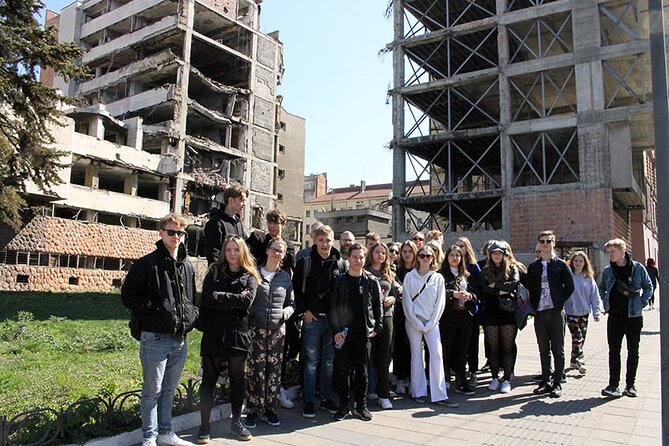
I would recommend it to you if you have a real interest in modern European history, military history, architecture, international politics, or the way cities remember trauma. It also suits anyone who has already seen Belgrade’s famous sights and wants to understand the city beyond the fortress, riverfront, and central squares.
The visual material is a real advantage. Seeing the current buildings while comparing them with photographs from 1999 helps you follow the story quickly. It is especially useful if you know little about the bombing before arriving.
You should think twice if you want a neutral, academic survey of NATO policy, the Kosovo conflict, and the breakup of Yugoslavia. The tour is centered on Serbian memories and Serbian losses. That does not make it unhelpful, but it does mean you should supplement the commentary with other sources if you want a full account of the conflict.
The experience may also be difficult for children or anyone sensitive to stories of people killed at work or in wartime attacks. The information does not set an age restriction, but the subject matter is plainly serious.
Price, timing, and cancellation details
The $145.10 per person price is easiest to justify when shared among several people. You receive private transport, a guide and driver, pickup and drop-off, bottled water, and five stops that would take more planning to reach independently. For a solo visitor, the price is less attractive unless private service and focused historical interpretation are priorities.
The experience is booked, on average, 31 days ahead. That suggests planning early if your Belgrade dates are fixed, though confirmation is normally provided at booking. Bookings made within 20 hours of departure are confirmed as soon as possible, subject to availability.
Free cancellation is available up to 24 hours before the 10:00 a.m. start time for a full refund. Cancellations or changes made less than 24 hours before departure are not accepted for a refund. The cutoff follows local Belgrade time, so check your booking carefully if you are arranging the tour from another time zone.
Should you book the NATO bombing tour?
Book it if you want to see the physical places tied to the 1999 bombing and you value a private guide who can connect photographs, dates, buildings, and personal loss. The RTS monument and unrepaired structure, the Ministry of Defence, and the former Chinese embassy are especially powerful because they turn an abstract news event into something you can locate on a city street.
The tour is not a cheerful introduction to Belgrade, and it is not a complete history of the Kosovo conflict. It offers a focused Serbian account, with some disputed subjects that deserve careful questioning. For the right reader, that is precisely its value. You leave with a better sense of how the bombing shaped the city’s memory and built environment.
FAQ
How long does the NATO Bombing of Belgrade Private Tour last?
The tour lasts approximately three to four hours, including travel between the five stops.
What time does the tour start?
The listed start time is 10:00 a.m.
Which sites does the tour visit?
It visits RTS, the Ministry of Defence, Poslovni centar Ušće, the Chinese Cultural Center at the former Chinese embassy site, and the Air Force Command Building.
Is hotel pickup included?
Yes. Hotel pickup and drop-off are included. Pickup can also be requested from an Airbnb, apartment, or the Belgrade port.
Is this a private tour?
Yes. Only your group participates in the activity.
What language is the tour offered in?
The tour is offered in English.
Can I cancel for a full refund?
Yes, if you cancel at least 24 hours before the experience’s start time. Cancellations or changes made less than 24 hours before the start are not eligible for a refund.
Just added in Belgrade
- Belgrade Layover Private tour + E-Scooter Sighteeing★ 5.0 · 6 reviews
- Belgrade Insight Private Tour – For Those Who Seek Answers★ 5.0 · 6 reviews
- Belgrade Private Driving & Walking Tour★ 5.0 · 4 reviews
- Belgrade Fashion and Design Tour – Discover Local Designers★ 5.0 · 4 reviews
- 4-Hour Belgrade Private Grand City Walking Tour★ 5.0 · 8 reviews
- Belgrade Local Craft Beer Tasting Tour★ 5.0 · 8 reviews
- Belgrade Chuggalong – Pub Crawl★ 4.0 · 8 reviews
- Ada Lake Tour★ 5.0 · 7 reviews
Tours in Belgrade, compared.
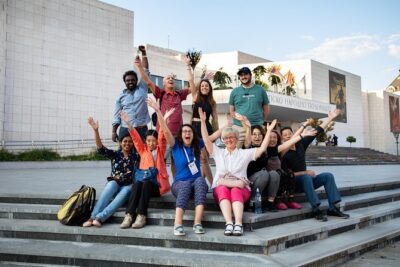
Northern Serbia: Sremski Karlovci and Novi Sad Full-Day Tour from Belgrade
Read our review →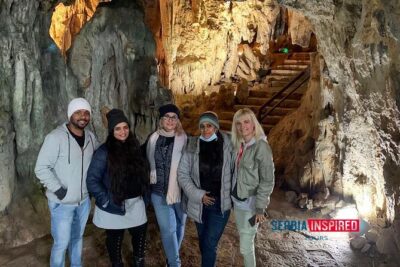
Day Trip from Belgrade: Gems of Eastern Serbia
Read our review →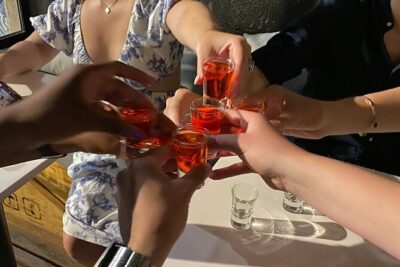
Belgrade Nightlife Bar Pub Club Crawl with Drinks
Read our review →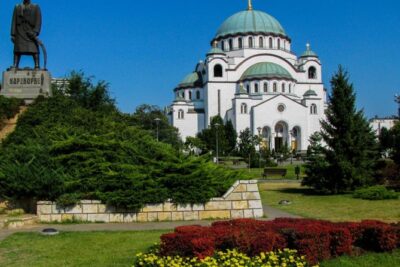
Belgrade Big Tour: Top Attractions and Belgrade Neighborhoods
Read our review →
Along the Danube: Golubac Fortress & Iron Gate Gorge day trip from Belgrade
Read our review →
Belgrade Underground Tour w/ Sparkling Wine Along the River
Read our review →Browse the lists this tour appears in