
Reviewed · BELGRADE FORTRESS & OLD TOWN TOURS
Architecture of New Belgrade – Brutalism Decoded
New Belgrade makes more sense when you look past the concrete. This private tour connects five major buildings with the politics and daily life of socialist Yugoslavia, from the marble-faced Museum of Contemporary Art to Genex Tower and the giant Sava Center. I like the focus on ordinary life inside the housing blocks, and I like that the guide brings in Yugoslavia’s Non-Aligned role rather than treating brutalism as mere photo scenery.
The private format is another plus, especially if you want to ask questions or set the pace with your own group. The main caution is timing: the advertised visit lasts about two and a half hours, but one booking account found the experience closer to two hours, so expect an approximate schedule rather than a tightly measured museum tour.
Key points at a glance
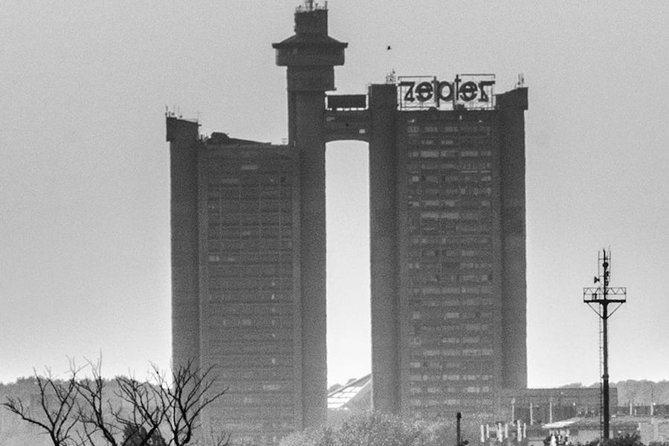
- Genex Tower up close: See Belgrade’s famous Western City Gate, a 30-floor pair of structures and an early Balkan example of a smart building.
- Five architectural stops: The route includes the Museum of Contemporary Art, Genex Tower, Sava Center, and the public housing world of Block 23.
- More than concrete: The guide explains Yugoslavia’s break with Stalin, the Non-Aligned Movement, and life in New Belgrade during the 1960s through the 1990s.
- A private English-language outing: Only your group participates, with guides such as Xenia leading the route.
- Starts at Ušće, finishes at Sava Center: You meet outside the Museum of Contemporary Art and end at Milentija Popovića 9.
- A specialist tour at $86.42 per person: The price makes the most sense for architecture fans, history buffs, and anyone who wants context you would not get from a quick self-guided look.
Why New Belgrade needs a guide
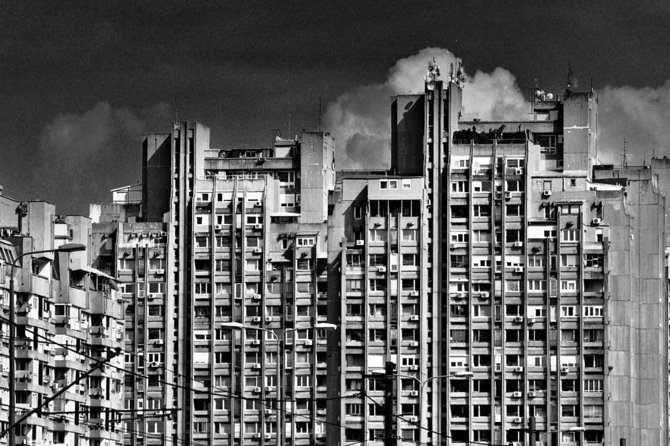
New Belgrade can seem flat and oversized at first glance. Broad roads, open blocks, huge office buildings, and apartment towers do not offer the compact streets or old-town charm many people expect from a city break.
That is exactly why this tour works. You are not simply checking off concrete buildings. You are learning why the district was built this way, how Yugoslav politics shaped its architecture, and what it was like to live in the blocks when the system was working well, and when it was not.
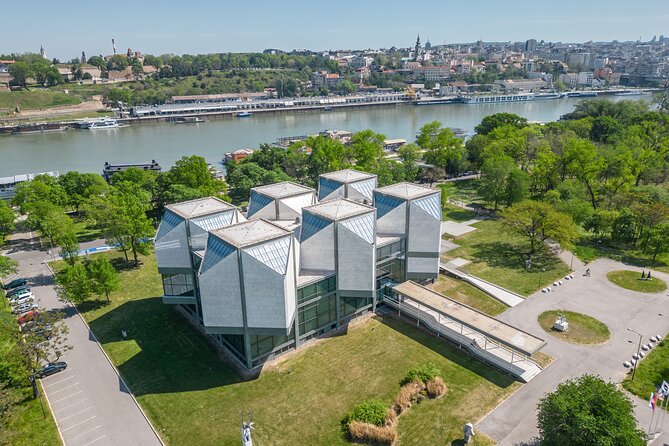
The tour also helps correct the lazy idea that all socialist buildings are dull, gray, and cheaply made. The Museum of Contemporary Art is a good early lesson. Its 1960s volumes use valuable marble facades, a choice that clashes with the usual image of austere state construction. The buildings here were often designed to project confidence, independence, and modernity.
A private guide can make that story easier to follow. You can stop to ask why one building looks grand while another feels practical, or how a housing block functioned as a small neighborhood. The guide’s personal stories about life in New Belgrade add a human scale that photographs cannot provide.
Other old-town walks in Belgrade:
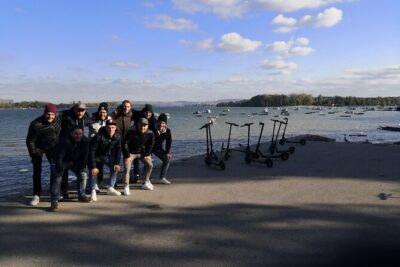
- E-Scooter Zemun Tour
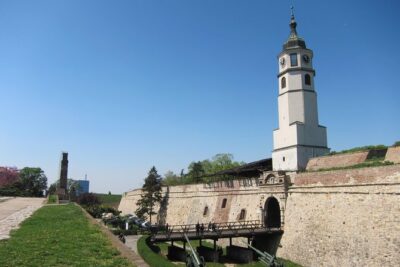
★ 5.0 · 26 reviews - Kalemegdan Segway Tour
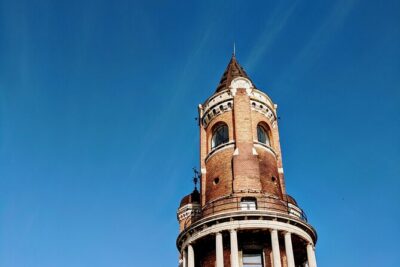
★ 5.0 · 18 reviews - 3-Hour Belgrade Zemun Neighborhood Tour
★ 5.0 · 8 reviews
Starting with marble at the Museum of Contemporary Art
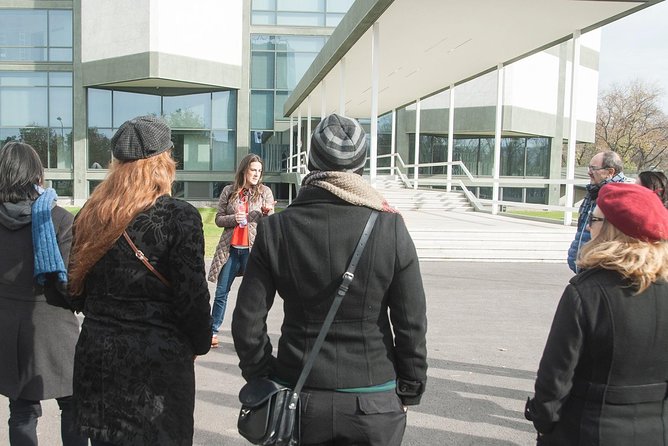
Meet your guide in front of the Museum of Contemporary Art at Ušće, at Ušće 10. This is a straightforward meeting point, near public transportation, and it gives you an easy place to find the group without hunting through a large neighborhood.
The museum itself is the opening architectural lesson. You will spend about 20 minutes looking at its modernist 1960s forms and discussing the materials and design choices that make it different from the standard socialist stereotype.
The marble facades matter. They show that Yugoslav architecture was not always about cutting costs or copying Soviet models. The country was building its own political identity, and public buildings could express that independence through bold shapes and expensive finishes.
Admission to the museum is not included. The tour description focuses on the exterior and architectural discussion, so you should not book this expecting a full indoor museum visit. If you want to see the art collection, treat that as a separate plan and check the museum’s own opening information.
This first stop is best for readers who enjoy learning how materials carry political meaning. It is less useful if you only want interior galleries or a long art-museum visit.
Park Prijateljstva and the Non-Aligned story
The next short stop is Park of Friendship, or Park Prijateljstva. You will spend about 15 minutes here, with free admission.
The park gives the tour a wider political frame. In 1961, heads of state planted trees here as symbols of peace during the founding of the Non-Aligned Movement in Belgrade. The movement eventually included 120 countries, and Yugoslavia’s role in it helped place Belgrade on a world stage far beyond Europe’s usual Cold War divisions.
This is a useful pause because it explains why New Belgrade contains such ambitious public buildings. The district was not built only to house people. It was also part of a national project that wanted to show Yugoslavia as modern, independent, and open to countries outside the Soviet and Western blocs.
The stop is short, so do not expect a long political lecture or a large collection of monuments. Its value comes from the connection between the park and the buildings you have just seen and will see next.
A drive past the Government Building
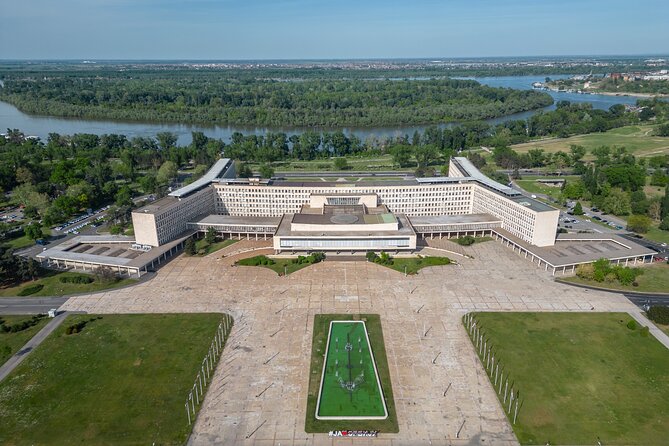
The route continues by vehicle past the huge Government Building. It is not listed as a formal walking stop, but it is an important part of the story.
The building belongs to an earlier phase of Yugoslav politics. Construction began before the country’s break with Stalin, and the project experienced that political shift while it was still being built. That makes the structure a physical record of a changing state.
This is one reason the private format helps. A guide can point out the building as you pass and explain why its design belongs to a different political moment from the later structures in New Belgrade. You get a sense of the district developing over time, rather than seeing every building as part of one single style.
Since this is a drive-by, the amount of viewing time depends on traffic and the pace of the group. If you need a long photo stop at every major building, this tour may feel brisk.
Same city, a different kind of afternoon:
- Northern Serbia: Sremski Karlovci and Novi Sad Full-Day Tour from Belgrade
★ 5.0 · 425 reviews - Day Trip from Belgrade: Gems of Eastern Serbia
★ 5.0 · 424 reviews - Belgrade Nightlife Bar Pub Club Crawl with Drinks
★ 5.0 · 277 reviews - Taxi to/from Belgrade Airport to/from Belgrade City Center
★ 5.0 · 241 reviews
Genex Tower, New Belgrade’s unforgettable gateway
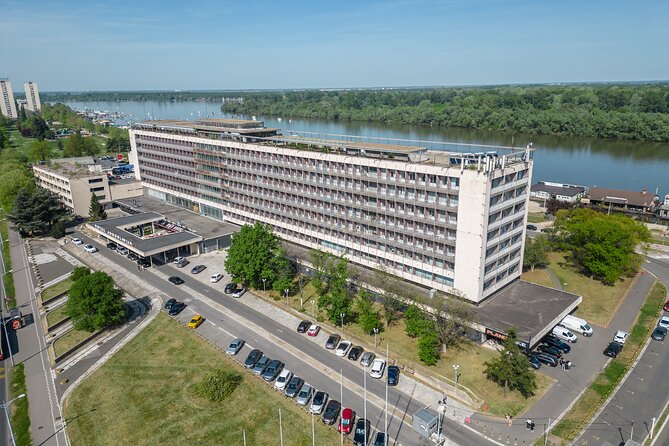
At Narodnih heroja 45, you get a close look at Genex Tower, also called the Western City Gate of Belgrade. This is the tour’s most recognizable photo stop for many people.
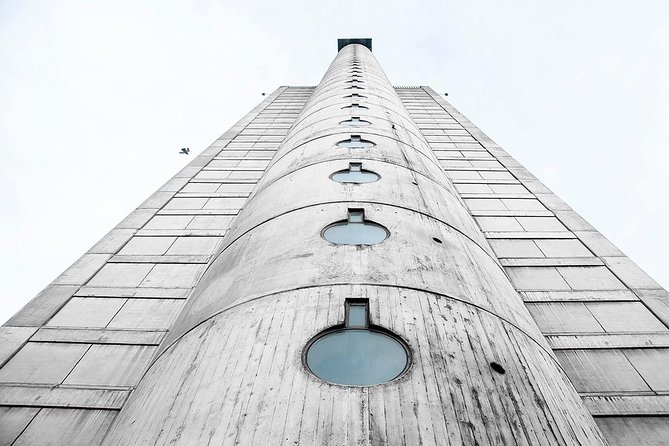
The 30-floor structure is about 40 years old and was designed as a gateway to New Belgrade. Its paired forms and dramatic scale make it easy to understand why it has become one of the city’s most photographed modern buildings.
The guide presents Genex Tower as the first smart building in the Balkans, and it earned attention in international architecture publications as an example of brutalism. That gives you more to consider than its unusual outline. You can look at how the tower was intended to signal technology, progress, and a new urban future.
You will spend around 20 minutes here, with no admission charge. The stop is close enough to the building for a proper look, rather than a quick glimpse from a passing car.
Keep your expectations practical. This is an architectural visit, not an observation-deck experience. The available information does not promise an interior tour or access to the tower. You are there to understand its design, history, and place in the city.
Sava Center and the speed of socialist construction
The final major architectural stop is Sava Center, at Milentija Popovića 9. The tour ends here, which is convenient if you plan to continue exploring New Belgrade or arrange your own transport afterward.
Sava Center was built at the end of the 1970s in record time. It was the first building of its type in this part of Europe, a huge congress center created for an international city that wanted the facilities to match its diplomatic ambitions.
You will spend about 15 minutes here. That may sound short for such a large building, but the point is to read the structure and its interior solutions rather than attend an event or take a full building tour.
The design still has surprising freshness after more than 40 years. The interior details are especially worth noticing because they show a more polished side of late Yugoslav modernism. The building was made for conferences, movement, public gatherings, and international visitors, so its design had to handle large numbers of people without feeling purely functional.
Sava Center is still in use. That gives the stop a sense of continuity that abandoned or heavily altered buildings cannot offer. At the same time, a 15-minute visit means you should not expect to see every major interior area.
Block 23 and the everyday life of New Belgrade
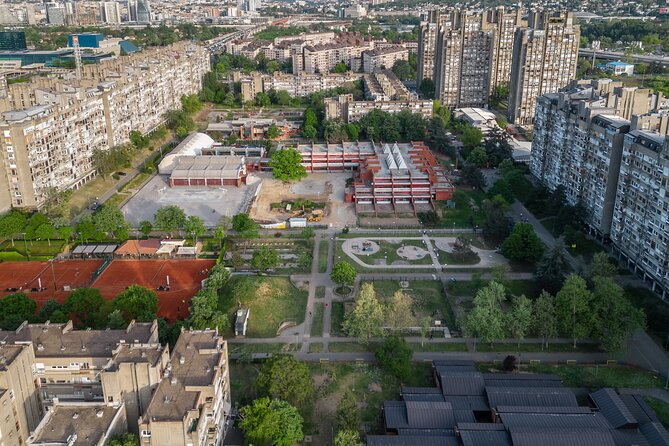
The last listed stop is Primary School Laza Kostić, inside Block 23. This is where the tour moves furthest from famous landmarks and closest to daily life.
Block 23 is presented as the most representative public housing project on the route. Its style is often described as concrete expressionism, and its plan aimed to provide more than apartment buildings. The block included a school, kindergarten, sports courts, and a small shopping mall.
That arrangement tells you how New Belgrade was meant to function. Housing was planned as a complete community, with many daily needs within the block. You are not just looking at apartment towers. You are looking at a social plan for how families would live, children would grow up, and neighbors would meet.
The guide shares personal stories about life in these blocks during their golden decades, the 1960s, 1970s, and 1980s. The account also covers the harder experience of the 1990s. That shift is important. It keeps the tour from turning Yugoslavia into either a perfect lost world or a simple tale of failed concrete planning.
You will spend about 15 minutes at this stop, and admission is free. The short timing means the guide’s explanation does much of the work. Listen for the link between architecture and social life: the location of the school, the role of sports courts, and the idea of a mini shopping area within the housing project.
For me, this is the stop that makes the tour feel most personal. Genex Tower is memorable, but Block 23 explains how the city was actually lived in.
What the $86.42 price buys you
At $86.42 per person, this is not a cheap sightseeing loop. Its value depends heavily on your interest in architecture, Yugoslav history, and the less familiar side of Belgrade.
You are paying for a private tour, an English-language guide, transport between parts of New Belgrade, and interpretation across several different sites. With only your own group, you can ask questions and focus more on the subjects that interest you. That is a better use of the price if you are traveling with friends or family who share the same curiosity.
The cost is harder to justify if you mainly want a list of photo stops. Several locations are free to visit, and Genex Tower, Sava Center, and the housing blocks can be seen independently. The guide’s value lies in explaining the political shifts, architectural ideas, and everyday stories that connect them.
Museum admission is not included, so add that cost only if you want to visit the museum’s interior and collection. The other listed stops have free admission.
The tour is recommended by 92 percent of booking customers and carries a 4.6 rating from 24 ratings. The strongest praise centers on punctuality, clear explanations, and the way the guide connects buildings with everyday life. Xenia is specifically praised for explaining New Belgrade’s history and architecture in a way that made the area feel different from the usual sightseeing route.
There is also a sharp negative account describing a disappointing experience, less than two hours in length, and a lack of preparation and personal connection. That matters because the tour relies on the guide. The experience can be excellent with a strong guide and less satisfying if the pacing feels rushed.
Timing, transport, and who should book
The planned duration is about two hours and 30 minutes. The listed stop times add up to roughly 85 minutes, with the remaining time used for driving and transitions. That is a sensible structure for a spread-out district, but it also means you should not expect long visits at each building.
You start at the Museum of Contemporary Art and finish at Sava Center. Both points are clearly given, and the area is near public transportation. The tour includes a mobile ticket and is offered in English.
Most people can take part, according to the supplied information. Since the activity includes driving and several brief outdoor stops, bring comfortable shoes and be ready for a city tour rather than a long indoor program. The group is private, so only your party participates.
Free cancellation is available if you cancel at least 24 hours before the local start time. Changes or cancellations inside that window are not accepted for a refund.
This tour suits you best if you:
- Like modern architecture and concrete buildings
- Want to understand Yugoslavia beyond its usual political headlines
- Prefer a private guide to a large group
- Have already seen central Belgrade and want a different side of the city
- Enjoy hearing how buildings affected ordinary family life
- Are happy with short stops and a moving route
It is less suitable if you want a leisurely museum visit, extensive interior access, or a full-day architectural study.
Should you book Architecture of New Belgrade?
Book it if you want Belgrade’s 20th-century story explained through real buildings rather than dates alone. The Museum of Contemporary Art, Park of Friendship, Genex Tower, Sava Center, and Block 23 show different sides of the same urban experiment.
The best reason to go is the connection between grand ideas and normal life. You learn about Non-Aligned diplomacy, political change, smart-building ambitions, public housing, and the realities of the 1990s in one compact route.
At $86.42 per person, I would choose this for a private group with a real interest in architecture or Yugoslav history. If you only want a few striking photographs, explore New Belgrade on your own. If you want to understand why the district looks the way it does, and how people lived inside it, this tour earns its place in your Belgrade plans.
FAQ
Where does the tour begin?
You meet the guide in front of the Museum of Contemporary Art at Ušće 10 in Belgrade.
Where does the tour end?
The tour ends at Sava Center, at Milentija Popovića 9, Belgrade 11000.
How long does the experience last?
The advertised duration is approximately two hours and 30 minutes.
Is the tour private?
Yes. Only your group participates in the activity.
Is the tour offered in English?
Yes. English is the listed language.
Is admission to the Museum of Contemporary Art included?
No. Admission to the museum is not included. The other listed stops have free admission.
Just added in Belgrade
- Belgrade Layover Private tour + E-Scooter Sighteeing★ 5.0 · 6 reviews
- Belgrade Insight Private Tour – For Those Who Seek Answers★ 5.0 · 6 reviews
- Belgrade Private Driving & Walking Tour★ 5.0 · 4 reviews
- Belgrade Fashion and Design Tour – Discover Local Designers★ 5.0 · 4 reviews
- 4-Hour Belgrade Private Grand City Walking Tour★ 5.0 · 8 reviews
- Belgrade Local Craft Beer Tasting Tour★ 5.0 · 8 reviews
- Belgrade Chuggalong – Pub Crawl★ 4.0 · 8 reviews
- Ada Lake Tour★ 5.0 · 7 reviews
Belgrade Fortress & Old Town Tours, compared.
Browse the lists this tour appears in